A missing tooth can change more than your smile. It can make chewing uncomfortable, affect how you speak, and leave nearby teeth without the support they need. If you are asking, how much do dental implants cost, the honest answer is that the price depends on the condition of your mouth and the kind of restoration you need. A clear treatment plan is the best way to get a number you can rely on.
At Quincy High Care Dentistry, we believe patients deserve straightforward information before making a major decision about their oral health. Dental implants are a long-term investment, but they are not a one-size-fits-all procedure. Knowing what is included in an estimate can help you compare options fairly and plan with confidence.
How Much Do Dental Implants Cost?
For one missing tooth, a complete dental implant restoration often costs roughly $3,500 to $6,500 or more in the greater Quincy and South Shore area. That total may include the implant post, the connecting abutment, and the final crown. Some offices advertise a lower starting price, but that figure may cover only the surgical implant post rather than the complete replacement tooth.
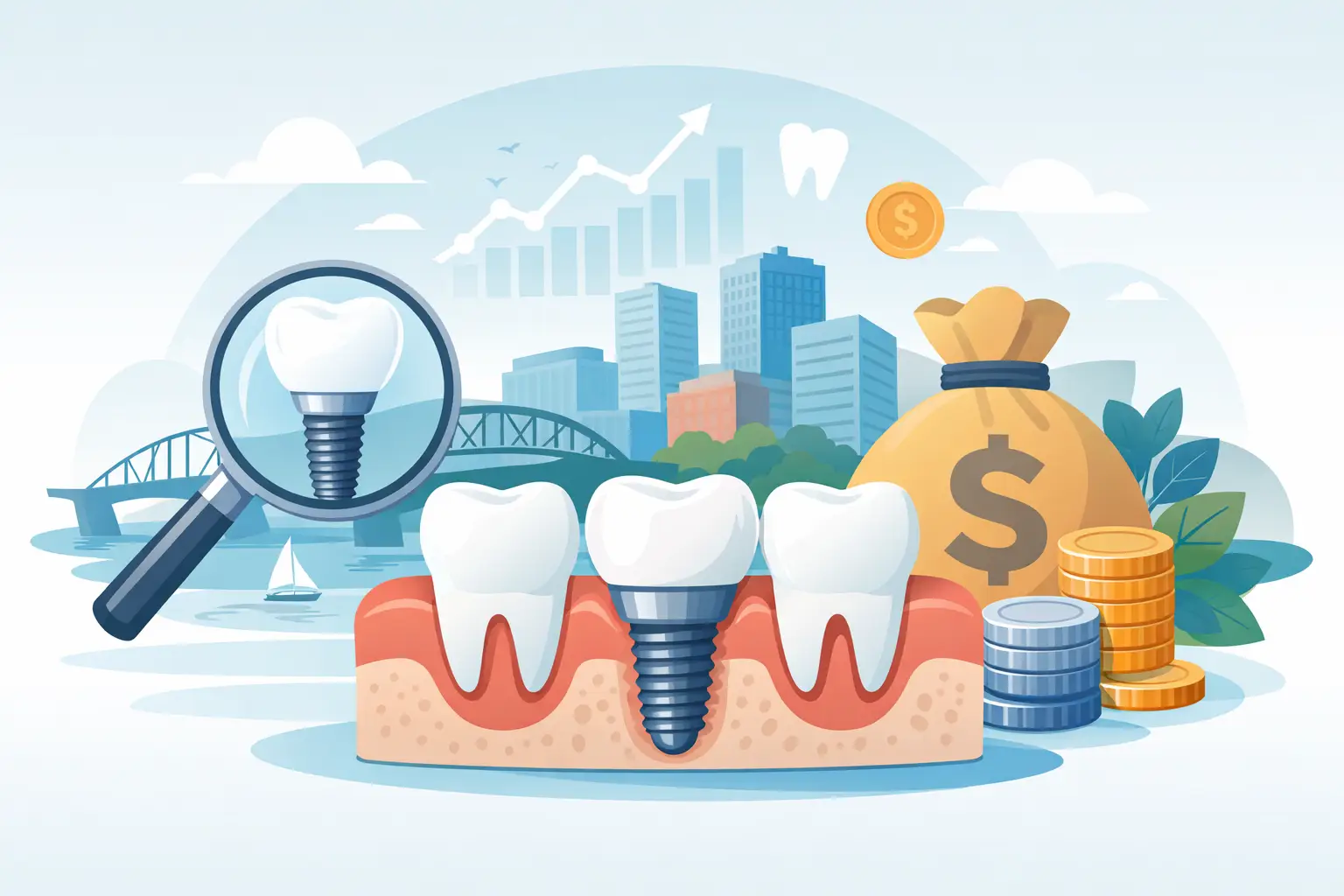
A single implant is usually made of three parts. The implant post is placed in the jawbone to act like a tooth root. After healing, an abutment connects the post to the visible crown. The crown is custom-made to match the shape, color, and function of your surrounding teeth.
Replacing several teeth or restoring a full arch costs more because the treatment is more complex. Depending on the number of implants, the restoration material, and whether additional procedures are needed, a full-arch implant solution can range from approximately $20,000 to $45,000 or more. Your dentist should explain exactly what is included before treatment begins.
What Is Included in an Implant Estimate?
A thoughtful estimate should reflect the full process, not just one appointment. Before recommending implants, your dentist needs to evaluate your gums, jawbone, bite, and overall dental health. The treatment may involve diagnostic imaging, planning, surgery, healing visits, and the final restoration.
Common parts of an implant treatment plan include the consultation and exam, X-rays or 3D imaging, extraction of a damaged tooth when needed, implant placement, the abutment, and the final crown, bridge, or denture. Follow-up visits are also an essential part of care. The goal is not simply to place an implant. It is to create a replacement tooth that feels comfortable and functions properly over time.
When comparing prices, ask whether the quote includes the final crown. Also ask whether imaging, sedation, temporary teeth, follow-up care, or possible bone grafting are separate charges. A lower initial number is not always a lower total cost.
Why Dental Implant Costs Vary
No two mouths have the same needs. The biggest factors affecting cost are usually the number of teeth being replaced, the health of the jawbone, the type of final restoration, and the complexity of the procedure.
Your Jawbone and Gum Health
Dental implants need a healthy foundation. If a tooth has been missing for a long time, the jawbone may have lost volume in that area. Bone grafting can help create enough support for an implant, but it adds treatment time and cost. Active gum disease or an untreated infection should also be addressed first to protect your long-term result.
This preparation is not an unnecessary extra. It is part of making sure the implant has the best chance to heal properly and remain stable.
The Type of Tooth Being Replaced
A front tooth may require extra attention to appearance, especially around the gumline. A molar must handle significant chewing pressure and may need a larger restoration. These differences can affect the materials used and the time required to achieve a natural, durable result.
If several teeth are missing, an implant-supported bridge may be more practical than placing one implant for every missing tooth. For patients missing all teeth in an upper or lower arch, implant-supported dentures can offer more security than traditional removable dentures. The right option depends on your health, goals, and budget.
Experience, Planning, and Materials
Implant treatment combines surgery, restorative dentistry, and careful planning. The quality of the implant system, the materials used for the crown or denture, and the clinical experience behind the treatment all matter. Choosing care based only on the lowest advertised price can create problems if essential planning, quality materials, or follow-up care are left out.
A well-planned implant should be designed around your bite, your appearance, and how you use your teeth every day. That level of personalized care has value.
Does Dental Insurance Cover Implants?
Insurance coverage varies widely. Some dental plans cover parts of implant treatment, such as the crown, extraction, imaging, or related restorative work, while excluding the implant post itself. Other plans provide limited implant coverage, often with an annual maximum that does not cover the full cost.
Before moving forward, ask your dental office to review your benefits and help you understand what your plan may pay. Insurance estimates are helpful, but final payment is determined by the insurance company after the claim is processed. It is also worth checking whether your plan has waiting periods, missing-tooth clauses, or restrictions on replacement timing.
Even if insurance does not cover the entire procedure, it may reduce some related expenses. Patients should also ask about payment options that can make treatment more manageable over time.
Are Dental Implants Worth the Cost?
For many patients, implants are worth considering because they replace both the visible tooth and the support underneath it. Unlike a removable denture, an implant is fixed in place. Unlike a traditional bridge, it may allow the dentist to replace one missing tooth without reshaping the healthy teeth next to the space.
Dental implants can help support comfortable chewing, maintain your bite, and reduce the risk of neighboring teeth shifting into the open space. With consistent brushing, flossing or interdental cleaning, regular dental visits, and healthy gums, implants can provide many years of service.
Still, implants are not automatically the best choice for every patient. A bridge or denture may be a better fit when budget, bone health, medical history, timeline, or personal preference points in a different direction. A dependable dentist will discuss the trade-offs honestly instead of pushing one treatment for everyone.
Questions to Ask Before You Decide
Before agreeing to treatment, make sure you understand the complete plan. Ask whether your estimate covers the implant, abutment, and final restoration; whether bone grafting or extractions may be needed; how long treatment is expected to take; and what maintenance your restoration will require.
You should also feel comfortable asking what happens if healing does not go as expected. While implants have a strong track record of success, no dental procedure comes with a guarantee. Clear communication about risks, healing, and follow-up care helps you make a decision without surprises.
A consultation is also the right time to talk about comfort. Many people delay treatment because they are anxious about dental procedures. Your dental team should explain each step in plain language and make a plan that respects your needs.
A Practical Next Step
The most useful implant price is not a number from an advertisement. It is a personalized estimate based on an exam, imaging, your dental health, and the result you want to achieve. Replacing a missing tooth is a meaningful decision, and you deserve care that is skilled, honest, and focused on what will serve you well for years to come.
If you are considering dental implants, start by scheduling an evaluation and bringing your questions. A clear conversation about your options, insurance, timeline, and total expected cost can turn a difficult decision into a manageable next step.