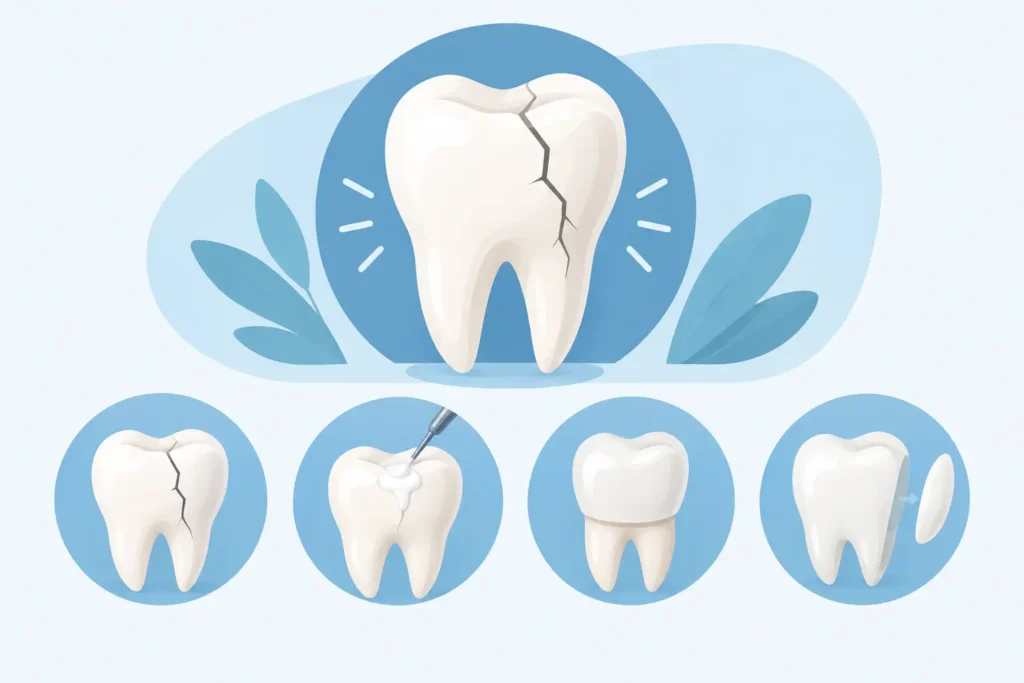
A tooth can look fine from the outside while having too little healthy structure left to handle everyday chewing. A large old filling may be cracking, a root canal may leave a tooth more fragile, or a fracture may make biting painful. In these situations, patients often ask: what is a dental crown, and is it really necessary?
A dental crown is a custom-made cover that fits over the visible portion of a damaged or weakened tooth. It restores the tooth’s shape, strength, and function while protecting what remains underneath. Think of it as a durable new outer surface for a tooth that can no longer safely do its job on its own.
The right recommendation depends on the condition of your tooth, your bite, the location of the tooth, and your long-term goals. A crown is not the answer for every cavity or chipped tooth, but when it is needed, it can help preserve your natural tooth for many years.
What Is a Dental Crown Used For?
A crown is most often recommended when a tooth has been weakened beyond what a filling can reliably support. Fillings replace damaged areas inside a tooth. A crown surrounds the tooth and holds it together, which makes it a better option when the remaining tooth structure is thin, cracked, or heavily restored.
Your dentist may recommend a crown after root canal treatment. Removing infection from inside a tooth is often the best way to relieve pain and save it, but the tooth can become more brittle afterward, especially a back tooth that handles strong chewing pressure. A crown provides protection against future fractures.
Crowns can also restore teeth with large cavities, broken cusps, significant wear, or cracks. In some cases, they are used to cover a discolored or misshapen tooth when a more conservative cosmetic option will not provide a predictable result. Crowns are also placed on dental implants to replace individual missing teeth.
The goal is practical: relieve discomfort when possible, restore normal biting, and prevent a damaged tooth from becoming a bigger problem. Treating a weakened tooth early may help avoid an emergency extraction later.
When a Filling May Be Enough Instead
A crown should not be treated as an automatic solution. If decay or damage is small and there is plenty of strong enamel remaining, a composite filling may be the more conservative and affordable choice. For a minor chip on a front tooth, bonding may provide a good result without removing additional tooth structure.
The decision changes when a filling would take up most of the tooth, when the edges of a tooth are cracking, or when a tooth has already needed multiple repairs. Large fillings can weaken the remaining walls of a tooth over time. Replacing one large filling with another may not solve the underlying structural issue.
A thorough exam and X-rays help determine what is happening below the surface. Your dentist should explain why a crown, filling, root canal, or another treatment is being recommended, along with the benefits and limitations of each option.
Types of Dental Crown Materials
Modern crowns are made from several materials. The best choice is not always the same for every tooth. Strength, appearance, location, bite force, and budget all matter.
Porcelain or ceramic crowns are popular because they can closely match the color and translucency of natural teeth. They are often an excellent choice for front teeth and can also work well for many back teeth.
Zirconia crowns are a type of ceramic known for their strength. They are commonly considered for molars or for patients who put heavy pressure on their teeth through clenching or grinding. Newer zirconia options can also look more natural than older versions.
Porcelain-fused-to-metal crowns combine a metal foundation with a tooth-colored porcelain exterior. They have a long track record of durability, though a dark line near the gumline can sometimes become visible over time, particularly if gums recede.
Gold or other metal crowns remain a strong, reliable option for certain back teeth. They do not match natural tooth color, but they can be very durable and may require less removal of healthy tooth structure. Material choices are worth discussing openly, including what your dental insurance may cover and any out-of-pocket cost differences.
What Happens During the Dental Crown Procedure?
The process usually begins with an exam, X-rays when needed, and a conversation about the tooth. If there is active decay, infection, or a crack extending too far below the gumline, that issue must be addressed before a permanent crown can be placed. Not every tooth can be saved, but many can.
For a traditional crown, the dentist gently reshapes the tooth to create enough room for the crown to fit naturally. Local anesthetic keeps the area comfortable during treatment. If much of the tooth is missing, a buildup material may be placed first to create a stable foundation.
Next, the dentist takes a precise digital scan or impression of the prepared tooth. This information is used to create a crown that fits your tooth, gumline, and bite. A temporary crown is commonly placed to protect the tooth while the final crown is being made.
At the final visit, the temporary is removed and the permanent crown is checked for fit, color, comfort, and bite. Small adjustments may be needed before it is cemented in place. Once the crown is secured, it should feel like part of your natural smile, although it can take a few days to adjust to the new shape.
Some offices can provide same-day crowns in appropriate cases. Whether same-day treatment is right for you depends on the tooth, the material selected, and the complexity of the restoration.
Does Getting a Crown Hurt?
Most patients are more comfortable than they expect. The tooth and surrounding tissues are numbed before preparation begins, and you should let your dental team know if you feel discomfort at any point.
After the appointment, mild tenderness in the gum area or sensitivity to temperature can occur for a short time. Over-the-counter pain relief may be enough for many patients, provided it is safe for them to take. The temporary crown may feel slightly different from a natural tooth, but it should not cause severe pain.
Call your dentist promptly if you have persistent throbbing, swelling, pain when biting, a loose temporary, or a crown that feels too high. A bite that is even slightly uneven can make chewing uncomfortable and should be adjusted.
How Long Does a Dental Crown Last?
A well-made crown can often last 10 to 15 years or longer. Longevity is affected by the crown material, the health of the tooth underneath, daily oral hygiene, and the amount of pressure placed on the tooth.
A crown cannot get a cavity, but the natural tooth around its edge can still develop decay. Gum disease can also affect the support around a crowned tooth. Brushing twice daily with fluoride toothpaste, cleaning between teeth every day, and keeping regular checkups remain essential.
Grinding or clenching can shorten the life of a crown and may damage other teeth as well. If you wake with jaw soreness, have worn teeth, or regularly break dental work, a custom nightguard may help protect your investment. Avoid using your teeth to open packages, bite fingernails, or crunch hard objects such as ice.
Caring for a Temporary Crown
A temporary crown is designed to protect your tooth, not to serve as a permanent restoration. Until your final visit, chew on the opposite side when practical and avoid sticky foods such as caramel, gum, and chewy candy. These foods can pull the temporary loose.
Floss carefully around the temporary. Instead of snapping the floss straight up, slide it out through the side to reduce the chance of lifting the crown. If the temporary comes off, keep it safe and contact your dental office. Do not wait until your final appointment, because the prepared tooth can shift or become sensitive.
Questions Patients Often Ask About Dental Crowns
Can a crowned tooth still hurt?
Yes. A crowned tooth may hurt if the nerve inside the tooth becomes inflamed, if the bite is uneven, if there is decay at the crown’s edge, or if the tooth or root has developed a crack. Pain deserves an evaluation rather than guesswork, especially if swelling or fever is present.
Can a crown be replaced?
Yes. Crowns can be removed and replaced when they are worn, cracked, loose, or no longer fit properly. The condition of the tooth underneath determines whether another crown is possible.
Will my crown look natural?
In many cases, yes. Your dentist can select a shade and shape that blends with nearby teeth. Front teeth may require more detailed shade matching than back teeth, while back teeth often place a greater priority on strength.
A crown is not simply a cosmetic cover. It is often a practical way to save a tooth that still has a healthy future. If you have a cracked tooth, a lost filling, pain when chewing, or a temporary crown that has come loose, timely care can make treatment simpler. Quincy High Care Dentistry is here to provide clear answers, personalized treatment, and dependable care when your smile needs attention.