A cracked tooth during lunch, a child’s knocked-out tooth after practice, or a sudden throbbing toothache can make it hard to think clearly. This South Shore dental emergency guide gives you practical next steps for protecting your smile, controlling discomfort, and deciding how quickly you need care.
Dental emergencies are not always dramatic, but they should not be ignored. Fast, appropriate action can often save a tooth, prevent an infection from worsening, and make treatment simpler and more affordable.
When Is a Dental Problem an Emergency?
Some dental concerns can wait for a regular appointment, such as mild sensitivity that comes and goes or a small chip with no pain. Others need same-day attention because delaying care may lead to more pain, infection, or permanent damage.
Call a dentist promptly for severe or persistent tooth pain, a loose adult tooth, a broken tooth with sharp edges, a lost filling or crown that causes sensitivity, swelling around a tooth or gum, or bleeding that does not stop with steady pressure. A knocked-out adult tooth is especially time-sensitive. The best chance of saving it is usually within the first hour.
A dental office can treat many urgent problems, including broken teeth, dental infections, lost restorations, and injuries to the mouth. However, certain symptoms require emergency medical care first. Go to an emergency room or call 911 if you have:
- Trouble breathing or swallowing
- Rapidly spreading swelling in the face, jaw, neck, or around the eye
- Heavy bleeding that will not stop after firm pressure
- A serious facial injury, suspected broken jaw, or loss of consciousness
The emergency room can help stabilize a dangerous infection, control severe bleeding, or evaluate trauma. You will still need follow-up dental treatment to address the cause of the problem.
South Shore Dental Emergency Guide: What to Do First
Start by staying calm and assessing the situation. Rinse your mouth gently with warm water to clear away blood, food, or debris. If there is swelling, place a cold compress on the outside of the cheek for 15 to 20 minutes at a time. Do not place heat on facial swelling, as heat can sometimes make inflammation worse.
For pain, use an over-the-counter medication only as directed on the label and only if it is safe for you based on your health history. Do not place aspirin directly on a tooth or gum tissue. It can burn the gums and will not treat the source of the pain.
If you have a dental emergency, contact a local dentist as soon as possible and describe the symptoms clearly. Mention whether there is swelling, fever, bleeding, trauma, a loose tooth, or difficulty biting. Those details help the office prioritize your visit and prepare for the care you may need.
If a Permanent Tooth Is Knocked Out
Handle the tooth by the crown, which is the chewing surface you normally see. Avoid touching the root. If it is dirty, rinse it briefly with milk or clean water, but do not scrub it or remove attached tissue.
If you can, gently place the tooth back into its socket and have the person bite down softly on clean gauze to hold it in place. If that is not possible, keep the tooth moist by placing it in milk or in the person’s mouth next to the cheek if they are old enough not to swallow it. Do not store it in a tissue, dry container, or plain tap water.
Then seek emergency dental care immediately. Time matters. A permanent tooth has the best chance of being reimplanted successfully when it is treated quickly.
A baby tooth is different. Do not try to put a knocked-out baby tooth back into the socket. It could damage the developing adult tooth underneath. Call a dentist for guidance, especially if there is significant bleeding, pain, or a possible injury to the jaw.
If a Tooth Is Cracked, Broken, or Loose
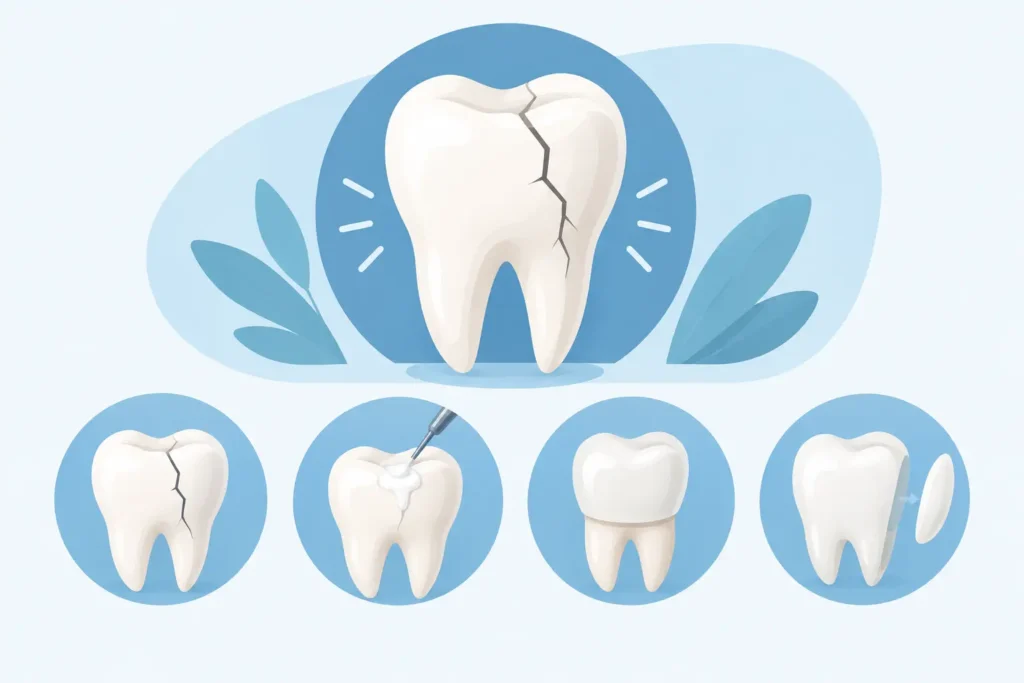
Rinse with warm water and save any larger pieces of the tooth you can find. Cover a sharp edge with dental wax or sugar-free gum only as a temporary measure, and avoid chewing on that side. A crack can extend deeper than it appears, even when the pain is mild.
A loose adult tooth after an accident needs prompt attention. Do not keep testing it with your tongue or fingers. Avoid hard foods, and see a dentist as soon as possible. Stabilizing the tooth early may improve the chance of keeping it.
If You Have Severe Tooth Pain or Swelling
A severe toothache may be caused by deep decay, a cracked tooth, gum disease, or an infection near the tooth root. Rinsing with warm salt water can help keep the area clean, but it is not a cure. Avoid putting clove oil, alcohol, or other home remedies directly on the gums, since they may irritate already-sensitive tissue.
Swelling deserves extra attention. A small, tender bump on the gums can be a sign of an abscess, which is an infection that needs professional treatment. Fever, facial swelling, a bad taste in the mouth, or increasing pain are reasons to call for same-day care. Antibiotics left over from another illness are not a safe substitute for a dental evaluation and may not treat the infection properly.
If a Crown, Filling, or Denture Breaks
A lost crown or filling can leave the tooth exposed to pressure and temperature changes. Keep the restoration if you have it, avoid sticky or hard foods, and schedule a visit promptly. Do not use household glue to put a crown or denture back in place. It is not safe for the mouth and can make a professional repair more difficult.
Temporary dental cement from a pharmacy may help in some cases, but it is only a short-term option. If the tooth is painful, the crown will not stay on, or the damaged area has sharp edges, ask for an urgent appointment instead of waiting.
What to Expect From a Same-Day Dental Visit
Emergency dental treatment begins with finding the cause of the problem, not simply masking the pain. The dentist may take X-rays, examine the tooth and surrounding gums, test your bite, and check for signs of infection or trauma.
Treatment depends on what is found. A broken tooth may need a filling, bonding, or a crown. An infected tooth may require root canal treatment or drainage. A lost restoration may be repaired or replaced. If a tooth cannot be saved, the dentist can explain practical replacement options and help you plan the next step.
At Quincy High Care Dentistry, same-day emergency visits are focused on relieving pain, protecting your oral health, and explaining your options in clear terms. Bring your insurance information, a list of medications, and any broken tooth pieces or restorations if you have them. If you are unsure about coverage, ask the office to help you understand what your plan may cover before treatment begins.
Avoid These Common Emergency Mistakes
Waiting for pain to become unbearable is one of the most common mistakes. Dental pain can sometimes fade temporarily even as decay or infection continues beneath the surface. A tooth that stops hurting is not always healed.
It is also wise to avoid using sharp objects to remove food trapped near a painful tooth. Floss gently if you suspect something is lodged between teeth, but do not dig into the gums. Avoid smoking or vaping after an injury or extraction, as it can slow healing and increase complications.
For children, keep a close watch after any mouth injury. Even when a baby tooth looks fine, changes in color, new swelling, trouble eating, or ongoing pain should be checked. A calm, timely visit can prevent a small injury from becoming a bigger concern.
Keep a Small Dental Emergency Kit at Home
A few simple supplies can make an unexpected situation easier to manage: clean gauze, a cold pack, dental wax, a small container with a lid, and your dentist’s contact information. If your family plays contact sports, a properly fitted mouthguard is one of the best ways to reduce the risk of broken or knocked-out teeth.
When something feels wrong, trust that instinct. Calling early does not mean you are overreacting. It means you are giving yourself or your family member the best opportunity for comfortable, efficient care and a healthier outcome.