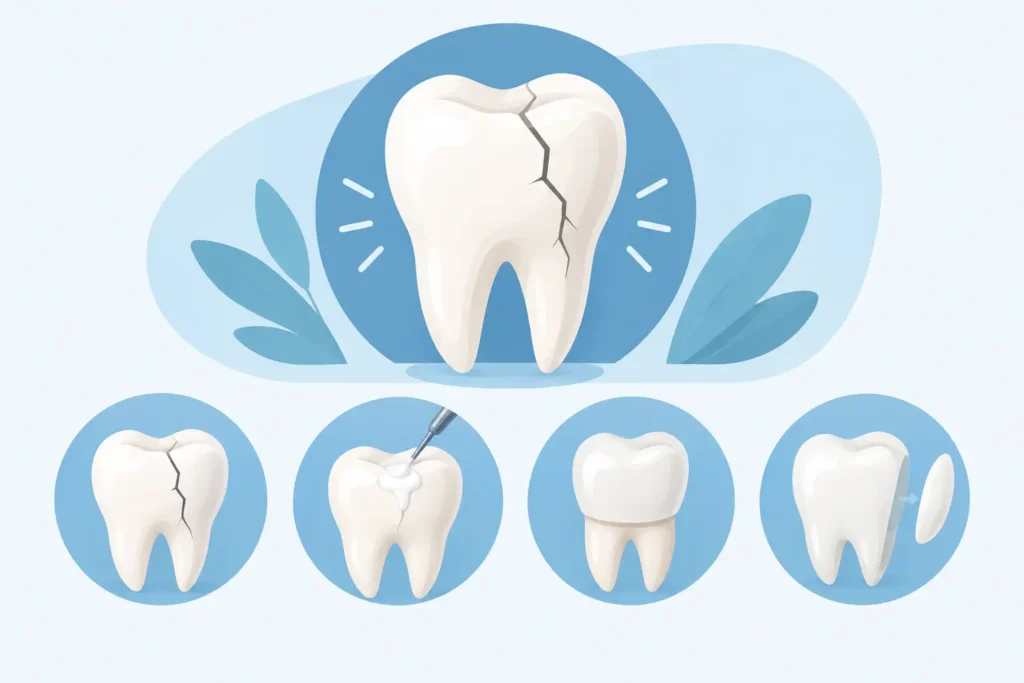
A small cavity can often be handled in one visit. A cracked tooth that hurts when you chew may need more protection. That is the real question behind dental crown vs filling: not which option sounds better, but which treatment gives your specific tooth the best chance to function comfortably for years.
Both fillings and crowns restore damaged teeth, and both can be excellent choices. The right one depends on how much healthy tooth structure remains, where the damage is located, whether the tooth has a crack, and how much pressure it takes when you bite. A thorough exam and X-rays help your dentist make a recommendation based on what will protect the tooth, not simply what is quickest.
Dental Crown vs Filling: The Main Difference
A filling repairs a smaller damaged area inside a tooth. After removing decay or old filling material, the dentist places a restorative material directly into the prepared space and shapes it to restore the tooth’s surface. Tooth-colored composite fillings are a common option because they blend naturally with surrounding enamel.
A crown covers the entire visible portion of a tooth above the gumline. Think of it as a custom-fitted protective cap. The dentist carefully prepares the tooth, takes impressions or digital scans, and places a crown made to match its shape, bite, and color. Because it surrounds the remaining tooth structure, a crown can provide more support when a tooth has been significantly weakened.
The distinction matters because a filling replaces what is missing. A crown reinforces what remains. If the damage is limited, preserving more natural tooth with a filling is often the more conservative approach. If too much of the tooth is gone or unstable, a large filling can leave the remaining walls vulnerable to fracture.
When a Filling Is Usually the Better Choice
A filling is often appropriate when decay is small to moderate and enough healthy enamel remains around it. It may also replace a worn or leaking older filling before bacteria can spread deeper into the tooth.
For many patients, a composite filling is a practical treatment because it is usually completed in one appointment and requires less removal of healthy tooth structure than a crown. It can restore normal appearance and chewing function without making the repair larger than necessary.
Fillings are not limited to tiny cavities. A dentist may use one for a somewhat larger repair when the tooth walls are strong, the bite forces are manageable, and there are no signs of cracks. The key is whether the tooth can still support itself after the decay is removed.
A filling may be less suitable when it would need to make up most of the chewing surface or extend deeply between tooth walls. In that situation, the filling can act like a wedge over time, especially on molars that absorb heavy pressure every day. The issue is not that fillings are poor restorations. It is that every restoration has limits.
When a Dental Crown May Be Recommended
A crown is commonly recommended when a tooth has lost a substantial amount of structure from decay, a large old filling, trauma, or wear. It can also be the preferred restoration for a tooth with a visible crack, a broken cusp, or repeated fractures around an existing filling.
Teeth that have undergone root canal treatment often need crowns, particularly back teeth. Removing infected tissue from inside the tooth is necessary to save it, but the tooth may become more brittle or already have extensive decay. A crown helps protect it from splitting during chewing.
A crown may also be used to restore a tooth that is severely discolored or misshapen, but at a family dental practice, the priority is usually function and long-term health. If a damaged tooth can be restored safely with a filling, a crown is not automatically necessary. If a crown is the safer option, delaying it can sometimes turn a repairable problem into a broken tooth or an extraction.
How Dentists Decide Between the Two
The size of a cavity is only one part of the decision. Your dentist will look at the remaining walls of the tooth, the location of the damage, your bite, the condition of nearby restorations, and whether the tooth has symptoms such as sensitivity or pain when chewing.
Cracks deserve special attention. Some cracks are superficial and can be monitored. Others travel into a chewing cusp or deeper toward the root. A tooth may look mostly intact but still need crown coverage because the crack has weakened the structure. Waiting until a cracked tooth breaks can make treatment more complicated and more expensive.
Your habits matter, too. If you clench or grind your teeth, chew ice, or frequently eat very hard foods, a large filling may face more stress than it would otherwise. Your dentist may discuss a night guard or recommend a stronger restoration based on those forces.
The goal is not to place the biggest restoration possible. It is to use the smallest treatment that can reliably protect the tooth. That balance is what makes a personalized exam more useful than choosing based on a photo, a price estimate, or a past experience with another tooth.
Cost, Insurance, and Long-Term Value
A filling generally costs less upfront than a crown because it uses less material and usually takes less time. Dental insurance may cover a portion of either service, but coverage varies by plan, annual maximum, deductible, and the reason the treatment is needed. Cosmetic requests may be handled differently from medically necessary restorative care.
The lower initial cost is not always the lower long-term cost. If a very large filling fails and the tooth fractures, treatment could later involve a crown, root canal treatment, or replacement of the tooth. On the other hand, placing a crown on a tooth that is still strong enough for a filling may mean more treatment than necessary.
Ask for a clear explanation of the recommended option, the alternatives, and what may happen if you wait. A straightforward treatment conversation should include both immediate cost and the realistic outlook for the tooth. Quincy High Care Dentistry works with most insurance plans and can help patients understand their expected costs before treatment begins.
What Treatment Feels Like
For either procedure, the tooth and surrounding area are numbed so you should be comfortable during treatment. With a filling, the dentist removes decay, prepares the surface, places the material in layers when needed, and adjusts your bite. Mild sensitivity to cold or pressure can occur briefly after a new filling, especially if the cavity was deep.
A traditional crown often takes two visits. At the first visit, the tooth is prepared and protected with a temporary crown while the final crown is made. At the second visit, the dentist checks the fit, color, and bite before securing it. Some practices may offer same-day crown technology in appropriate cases, but not every tooth or material is a candidate.
After a crown is placed, it should feel like a natural part of your bite. Call the office if you have persistent pain, a bite that feels high, a loose temporary crown, or swelling. Those concerns are best addressed promptly rather than tolerated.
Do Not Wait for a Dental Emergency
A lost filling, broken crown, sharp tooth edge, or sudden pain can make eating difficult fast. Rinse gently with warm water, avoid chewing on that side, and contact a dentist. Do not use household glue to reattach a crown. If you still have it, keep it clean and bring it to your appointment.
Seek urgent care when pain is severe, swelling develops, a tooth is broken after an injury, or you notice a pimple-like bump on the gums. Infection and fractures do not reliably improve on their own. Timely treatment can often preserve more natural tooth structure and reduce the chance of a more involved procedure.
A Repair Should Protect More Than Your Smile
The best choice is the one that lets you eat, speak, and smile without putting a weakened tooth at unnecessary risk. If you are unsure whether an old filling, cracked tooth, or new cavity needs attention, schedule an exam before the problem has a chance to become urgent. A calm conversation and a clear plan can make the next step much easier.