A cavity treatment should solve a problem, not create more uncertainty. When considering composite filling vs amalgam, the best option depends on the tooth involved, the size and location of the cavity, your bite, your budget, and how much healthy tooth structure remains. Both materials have a long history in restorative dentistry, but they work differently and offer different advantages.
At Quincy High Care Dentistry, the goal is straightforward: explain your choices clearly, recommend what supports your oral health, and help you move forward with confidence.
Composite Filling vs Amalgam: The Main Difference
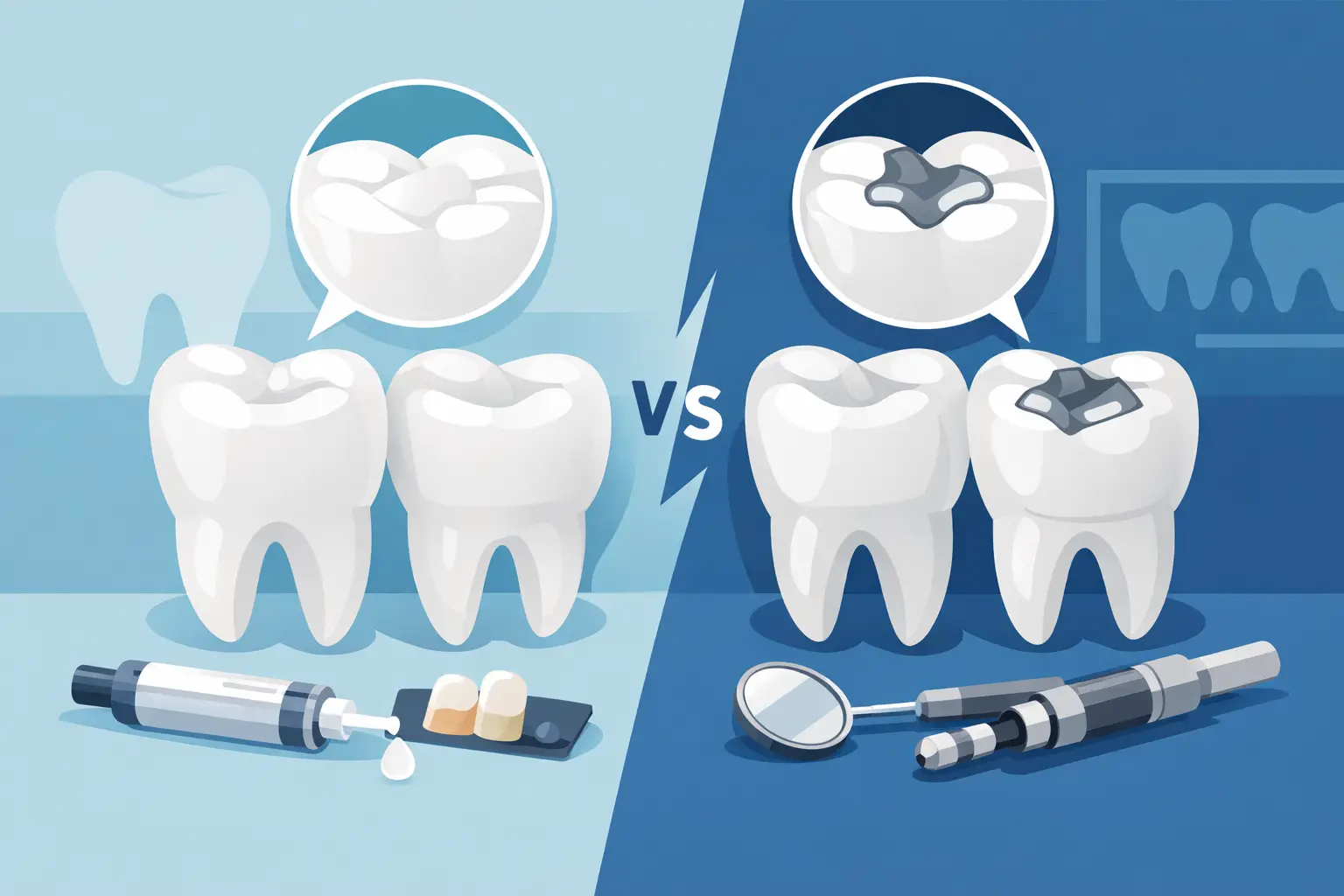
Composite fillings are tooth-colored restorations made from a blend of resin and fine filler particles. The material is placed in layers, shaped to match the tooth, and hardened with a curing light. Because it can be matched to the natural shade of your enamel, composite is commonly used where appearance matters, including visible front teeth and smaller areas on back teeth.
Amalgam fillings are silver-colored restorations made from a mixture of metals. They have been used in dentistry for well over a century and are known for their strength and ability to hold up under heavy chewing forces. Their dark, metallic appearance is their most obvious drawback for many patients.
Neither material is automatically right for every cavity. A filling is not simply a color choice. It is a functional repair that must seal the tooth, support normal chewing, and fit the condition of that specific tooth.
Appearance and Tooth Location
For a cavity on a front tooth or a tooth that shows when you smile, composite is usually the clear preference. It blends with surrounding enamel and can often be shaped in a way that preserves a natural-looking contour. Many patients also prefer composite for visible areas because it does not darken the smile with a metallic color.
On molars, the decision can be less obvious. Back teeth take the greatest pressure from chewing, especially for people who clench or grind. Amalgam has a well-established record of durability in large fillings on these teeth. Composite can also be an excellent choice for many molars, particularly when the cavity is small to moderate and the tooth can be kept dry during placement.
The location of decay matters as much as the location of the tooth. A cavity between teeth, near the gumline, or in an area that is difficult to isolate may require a different approach than a simple cavity on the chewing surface.
Strength, Longevity, and Your Bite
Amalgam is durable and relatively forgiving in areas exposed to moisture. It can be especially practical for large restorations in back teeth, where saliva control may be more difficult and chewing pressure is high. It does not match tooth color, but it has remained in use because it performs reliably in the right setting.
Composite fillings have improved significantly over the years. Modern materials can be strong, attractive, and long-lasting when they are placed carefully and supported by good daily oral hygiene. However, placement technique matters. Composite requires the tooth to stay dry while the material is bonded, and very large composite fillings may not be the best long-term answer if there is not enough remaining tooth structure.
A filling can last for years, but no restoration lasts forever. Its life span depends on the material, the size of the repair, how well the margins remain sealed, your brushing and flossing habits, and whether you grind your teeth. If a tooth has a very large cavity, cracks, or weakened cusps, a crown or another restoration may offer better protection than a filling alone.
How Much Tooth Structure Can Be Preserved?
Composite bonds directly to the tooth. In some cases, that bonding allows the dentist to remove less healthy structure while preparing the cavity. This can be a meaningful advantage, especially for smaller areas of decay.
Amalgam does not bond to enamel and dentin in the same way. It is held in place by the shape of the prepared space, which may require a different preparation design. That does not mean amalgam is a poor choice. It simply means the dentist weighs the amount of decay, the tooth’s shape, and the stability needed before recommending a material.
The priority is always to remove decay thoroughly and leave the tooth strong enough to function. Saving healthy tooth structure is valuable, but it should not come at the expense of a restoration that is poorly supported or likely to fail early.
Cost and Insurance Considerations
Cost is a real part of the decision for many families. Composite fillings can cost more than amalgam because the placement process is more detailed and time-intensive. Insurance plans may cover composite fillings differently depending on the tooth. Some plans cover tooth-colored material on front teeth but pay only up to the cost of an amalgam filling for back teeth, leaving the patient responsible for the difference.
Before treatment, it helps to ask how your plan handles each option and what your expected out-of-pocket cost may be. A lower upfront cost can be useful, but it is also worth considering how the material fits your long-term needs. A filling that looks right, functions well, and is appropriate for the tooth can be a better value than a decision based on price alone.
Dental teams should be able to explain the practical differences without pressure. If a recommended restoration is more extensive than a filling, ask why. A clear explanation of the tooth’s condition helps you make an informed choice.
What About Mercury in Amalgam Fillings?
Dental amalgam contains elemental mercury combined with other metals to form a stable filling material. This concern leads many patients to ask whether they should avoid amalgam or replace existing fillings.
For most people with intact amalgam fillings, replacement is not routinely recommended solely because of the material. Removing a stable filling can mean removing additional tooth structure and temporarily exposing the area to more material during the procedure. Replacement is generally considered when there is decay around the filling, a crack, leakage, fracture, or another clear clinical reason.
Some patients may be advised to avoid amalgam because of specific health circumstances or sensitivities. Your dentist can review your medical history, current dental condition, and personal concerns before making a recommendation. The right conversation is individualized, calm, and based on the tooth in front of you.
When Composite Is Often a Good Choice
Composite may be especially suitable when the cavity is small or moderate, the tooth is visible when you smile, or preserving a natural appearance is important to you. It is also commonly selected for replacing old visible fillings and repairing minor chips or worn edges.
It may be less ideal when the cavity is very large, moisture cannot be controlled well, or the tooth is under extreme bite pressure. In those situations, the dentist may discuss amalgam, a crown, or another restorative option depending on the amount of remaining healthy tooth.
When Amalgam May Still Make Sense
Amalgam may be a practical option for a large cavity in a back tooth, particularly when strength and affordability are the main priorities. It can also be useful when treatment conditions make composite bonding more challenging.
That said, availability and insurance coverage vary, and many practices primarily use composite materials for routine fillings. The decision should never be framed as old versus new. It should be framed as which material gives the tooth the best chance to stay comfortable, functional, and protected.
Questions Worth Asking Before Your Filling
A productive dental conversation can be simple. Ask whether the cavity is small enough for a filling, how much healthy tooth remains, whether the tooth shows when you smile, and how your insurance will apply. If you grind or clench, mention it. Those habits can change the recommendation and may mean a night guard is worth discussing.
If you are replacing an existing filling, ask what caused it to fail. Recurrent decay, a fractured tooth, and a worn-out filling are different problems, and they do not always call for the same repair.
The most helpful choice is the one that fits your tooth, your health history, and your everyday needs. A careful exam and a direct conversation can turn a confusing materials decision into a practical plan for keeping your smile healthy.