A chipped tooth can happen in one quick moment: biting a hard popcorn kernel, catching an elbow during a game, or discovering that an old filling has weakened the edge of a tooth. Knowing how to fix chipped tooth damage begins with one practical step: protect the tooth and have a dentist assess it before a small problem becomes a painful one.
The good news is that many chipped teeth can be repaired comfortably and efficiently. The right treatment depends on how much tooth structure is missing, whether the nerve is affected, and where the chip is located. A tiny chip on a front tooth is very different from a fractured back tooth that hurts when you chew.
What to Do Right After You Chip a Tooth
First, rinse your mouth gently with warm water. This clears away any small fragments and makes it easier to see where the damage occurred. If you can find the broken piece of tooth, place it in a clean container with milk or saliva and bring it to the dental office. In some cases, a dentist may be able to bond the fragment back into place.
If the edge feels sharp, cover it temporarily with dental wax from a pharmacy. Sugar-free gum can work for a short time if dental wax is not available. This is only a protective measure, not a repair. Avoid using household glue, nail glue, or any do-it-yourself repair kit that is not specifically recommended by a dental professional. These materials can irritate the mouth, trap bacteria, and make a proper repair more difficult.
A cold compress on the outside of the cheek can help limit swelling after an injury. For discomfort, use an over-the-counter pain reliever as directed on the label, provided it is safe for you to take. Do not put aspirin directly on the tooth or gums, as it can burn soft tissue.
Until your appointment, avoid chewing on that side of your mouth. Skip hard, sticky, very hot, and very cold foods. A chipped tooth may have exposed sensitive inner layers, and pressure or temperature changes can trigger pain.
When a Chipped Tooth Needs Urgent Care
Not every chip is an emergency, but it should still be evaluated soon. Even a small break can leave the tooth vulnerable to further cracking or decay. Call for a same-day dental visit if you have significant pain, bleeding that does not stop, swelling, a loose tooth, or trouble biting normally.
Seek prompt care if any of the following applies:
- The tooth is cracked deeply, broken near the gumline, or has a visible red or pink area inside it.
- You have facial swelling, fever, drainage, or a bad taste that could point to infection.
- The injury followed a fall, sports impact, or accident and other teeth may also be affected.
- A child has chipped a baby tooth or permanent tooth, especially after a blow to the face.
A tooth that does not hurt can still need treatment. The nerve may remain protected for now, while a crack continues to spread under normal chewing pressure. Early care is often simpler and more affordable than waiting for pain or infection.
How Dentists Fix a Chipped Tooth
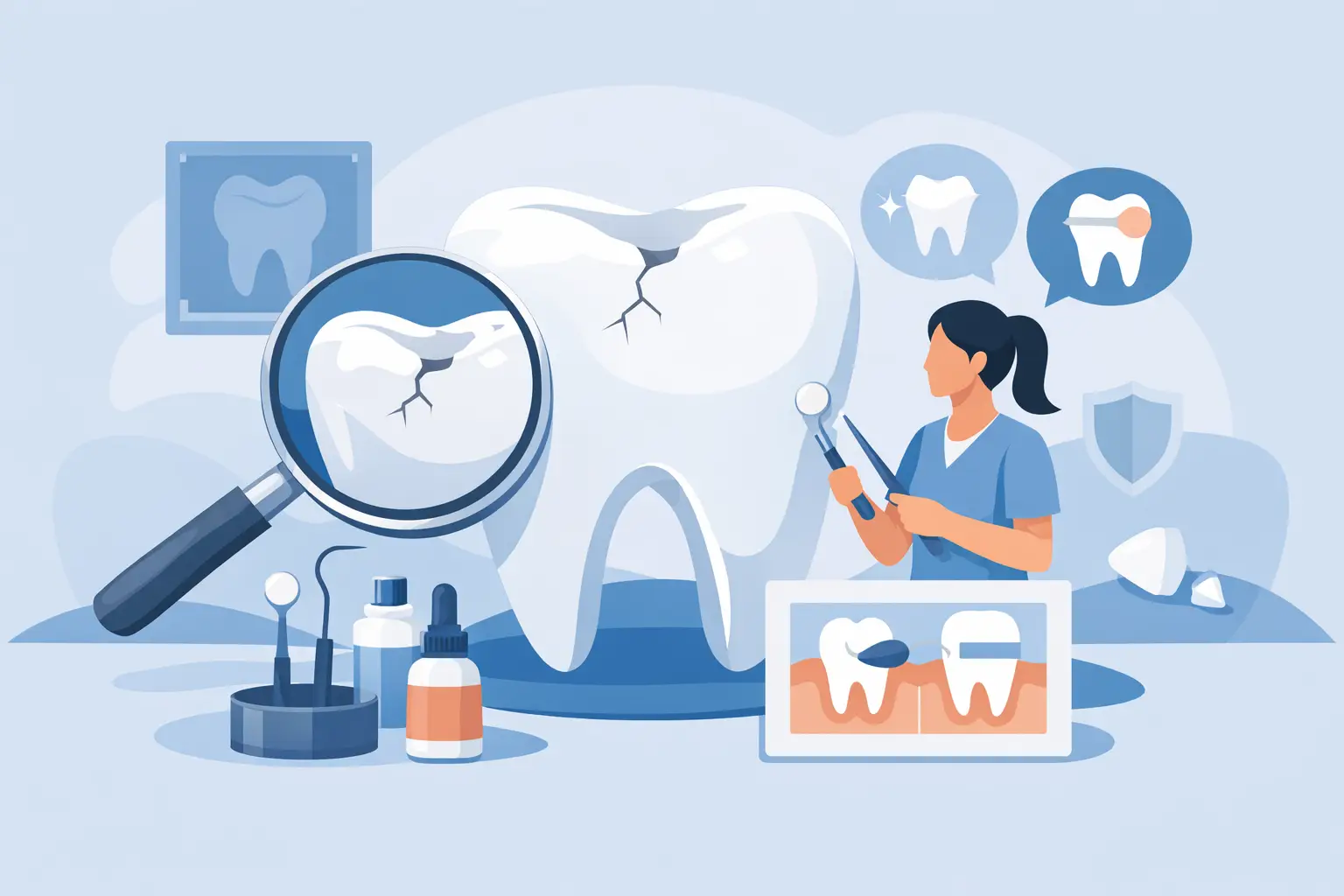
Your dentist will examine the tooth, check your bite, and may take an X-ray to look for damage below the surface. From there, treatment is based on the size and location of the chip, the tooth’s condition, and your long-term needs.
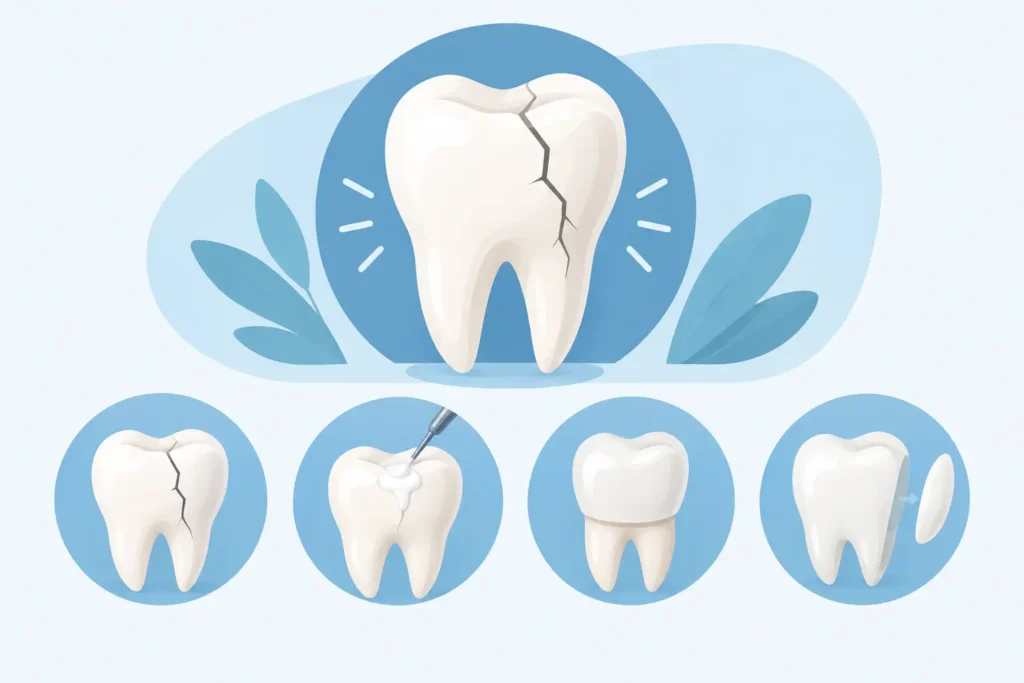
Smoothing or reshaping for a minor chip
When only a small amount of enamel has chipped, the dentist may be able to smooth and polish the edge. This removes roughness that could irritate your tongue or cheek and helps the tooth look more natural. It is a conservative option, but it only works when enough healthy enamel remains.
Dental bonding for visible chips
Composite bonding is a common repair for a chipped front tooth. The dentist applies a tooth-colored resin, shapes it to match the tooth, then hardens and polishes it. The appointment is often completed in one visit, and the result can blend naturally with your smile.
Bonding is practical and generally less costly than a crown or veneer, but it is not indestructible. It can stain over time and may chip again if you bite nails, chew ice, or use your teeth to open packaging. For many small-to-medium chips, however, it is an excellent balance of appearance, comfort, and value.
A filling for a chipped back tooth
A chip in a molar or premolar may be repaired with a composite filling, particularly if a small portion of the chewing surface or an old filling has broken away. The dentist removes any weakened material and restores the shape so your bite feels even again.
This treatment is often appropriate for limited damage. If the tooth has lost a large cusp – the pointed or raised part used for chewing – a filling alone may not provide enough strength for the long term.
A crown for a larger break
A dental crown covers and protects the visible part of a tooth. It is often recommended when a chip is extensive, the remaining tooth is weak, or a large fracture affects a back tooth that handles heavy chewing force. A crown can restore both function and appearance while reducing the risk of another break.
Crowns require more preparation than bonding because the tooth must be shaped to support the restoration. That trade-off can be worthwhile when the alternative is repeated repairs or a tooth that is at risk of splitting further.
Root canal treatment when the pulp is injured
Inside every tooth is soft tissue called the pulp, which contains nerves and blood vessels. If a deep chip exposes or damages this area, root canal treatment may be needed to save the tooth. Symptoms can include severe lingering sensitivity, spontaneous pain, swelling, or a visible pink or red spot in the center of the tooth.
During root canal treatment, the infected or damaged pulp is removed, the inside of the tooth is cleaned, and the tooth is sealed. A crown is often placed afterward to protect it from fracture. While this may sound intimidating, modern treatment is designed to relieve pain and preserve your natural tooth whenever possible.
Can You Fix a Chipped Tooth at Home?
You can manage the situation at home temporarily, but you cannot safely restore a chipped tooth permanently without professional treatment. Temporary dental repair materials may cover a sharp area for a day or two, yet they do not rebuild the tooth’s strength, correct your bite, or identify a deeper crack.
Home measures are useful for comfort while you arrange care: rinse with warm water, use dental wax over a sharp edge, eat soft foods, and protect the area from pressure. They are not a substitute for an exam. If the chip is on a tooth with an old filling, crown, or previous root canal, timely evaluation matters even more because the remaining structure may already be weakened.
How to Prevent Another Chip
Once your tooth is repaired, a few habits can help protect the result. Do not chew ice, hard candy, pen caps, or fingernails. Use scissors rather than your teeth to open packages. If you grind or clench your teeth at night, ask your dentist whether a custom night guard would help prevent repeated wear and fractures.
For athletes, a properly fitted mouthguard is one of the simplest ways to reduce dental injuries. Parents should also know that a child’s chipped tooth deserves a call to the dentist, even when the child seems comfortable. Protecting a developing smile early can prevent complications later.
A chipped tooth is rarely something to ignore, but it does not have to disrupt your life for long. Quincy High Care Dentistry provides personalized restorative and emergency dental care for patients who need a clear answer, a comfortable plan, and treatment that fits the real condition of their tooth. The sooner the tooth is checked, the sooner you can get back to eating, speaking, and smiling without worrying about the next bite.