A missing tooth can change more than a smile. It can make meals less enjoyable, affect speech, and leave neighboring teeth without the support they need. So, how do dentures work? These custom removable appliances replace missing teeth and the gum tissue around them, helping restore everyday function while supporting a natural-looking smile.
Dentures have come a long way from the bulky, artificial-looking appliances many people picture. A well-made denture is designed around your mouth, your bite, and your goals. It may replace all teeth in an arch, only a few teeth, or work with dental implants for greater stability.
How Do Dentures Work in Your Mouth?
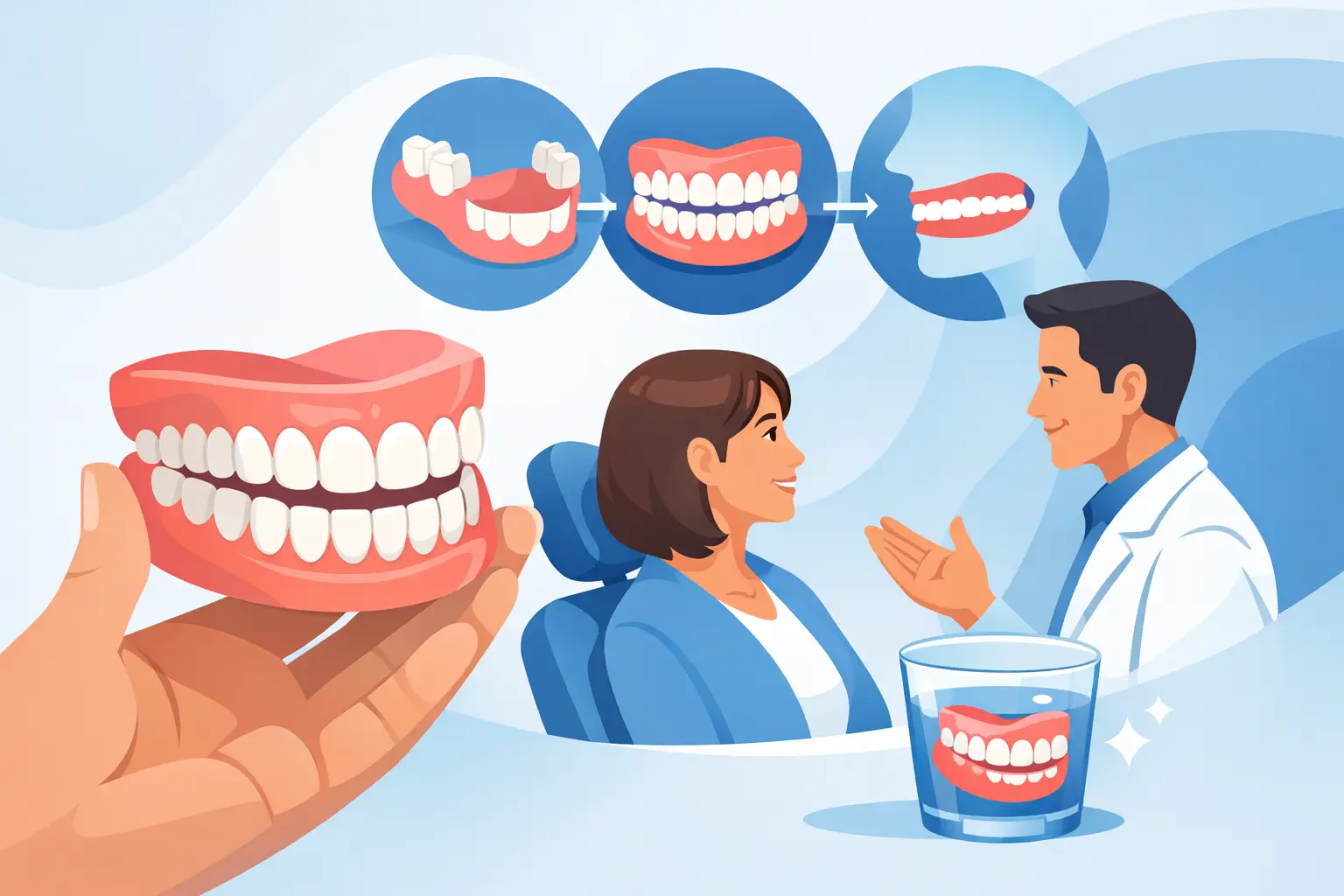
Dentures use a strong acrylic base that is shaped to rest against your gums. Artificial teeth are set into that base and arranged to support a comfortable bite and natural appearance. Full dentures replace every tooth in the upper jaw, lower jaw, or both. Partial dentures replace several missing teeth while fitting around the healthy teeth that remain.
An upper full denture usually stays in place through a close fit against the gums and the natural suction created by the roof of the mouth. A lower full denture has less surface area to work with, so it depends more on its precise fit, the shape of the gum ridge, and the muscles of the cheeks and tongue. This is one reason lower dentures can feel less stable than upper dentures.
Partial dentures generally use small clasps or precision attachments to connect to remaining teeth. The appliance fills the spaces left by missing teeth, helping prevent nearby teeth from drifting. Depending on the case, those clasps may be metal, tooth-colored, or designed to be less visible.
Dentures should not hurt. There is an adjustment period, especially when teeth have recently been removed or a patient has never worn an appliance before. Mild pressure, increased saliva, or slight changes in speech can be normal at first. Persistent pain, loose movement, sores, or clicking when you bite are signs that the denture needs professional adjustment.
The Main Types of Dentures
The best option depends on how many teeth are missing, the health of the gums and jawbone, the condition of remaining teeth, and the level of stability you want. A dental exam is the right place to compare the choices honestly.
Complete Dentures
Complete dentures are used when all teeth in the upper or lower arch are missing or need to be removed. Conventional complete dentures are typically made after the gums have healed following extractions. This allows the dentist to create a more stable long-term fit once swelling has gone down.
Immediate dentures can be placed on the same day teeth are removed, so you do not have to go without teeth during healing. The trade-off is that gums and bone change quickly after extractions. Immediate dentures commonly require adjustments, relines, or eventual replacement as the mouth heals.
Partial Dentures
A partial denture is often a practical option when several healthy natural teeth remain. It replaces missing teeth and helps distribute chewing forces more evenly. It can also help preserve the position of the remaining teeth, which may otherwise shift into open spaces over time.
Some partial dentures have a metal framework for strength, while others use flexible, gum-colored materials. Flexible options can look appealing, but they are not automatically right for every mouth. The shape of your bite, the location of missing teeth, and the need for future repairs all matter.
Implant-Supported Dentures
Dental implants can provide a more secure foundation for a denture. Small implant posts are placed in the jawbone and, after healing, connect to a denture through attachments. Some implant-supported dentures snap in and out for cleaning, while others are fixed in place and removed only by the dentist.
This approach can significantly improve stability, particularly for a lower denture. It may make chewing and speaking easier and can help reduce bone loss in the jaw. However, implants require surgery, sufficient bone or possible bone grafting, healing time, and a larger upfront investment. For many patients, the added confidence is worthwhile. For others, a well-fitted traditional denture remains the most practical choice.
What Eating and Speaking Feel Like With Dentures
Dentures restore function, but they do not work exactly like natural teeth. Your cheeks, tongue, and jaw muscles need time to learn how to keep the appliance steady. Most people adapt gradually over several weeks, and follow-up adjustments are a normal part of the process.
Start with soft foods cut into small pieces, then add firmer foods as comfort improves. Try chewing slowly on both sides at the same time instead of biting forcefully with the front teeth. Sticky foods, hard candy, and very tough meats may still be challenging with removable dentures. Denture adhesive can add confidence for some patients, but it should not be used to compensate for a denture that is painful or badly loose.
Speech may sound slightly different at first, particularly with words that use “s,” “f,” and “th” sounds. Reading aloud at home can help the tongue adapt more quickly. If speech remains difficult after the adjustment period, the denture may need a bite or fit correction.
Why Dentures Can Become Loose Over Time
Dentures are custom-made, but your mouth is not static. After teeth are lost, the jawbone naturally changes shape because it no longer receives stimulation from tooth roots. Gum tissue also changes over time. A denture that fit well a few years ago can eventually start to rock, rub, or slip.
This does not mean you have done anything wrong. It means the appliance needs attention. A reline adds material to the inside surface so it conforms more closely to the current shape of your gums. In other cases, especially when teeth are worn down or the base is damaged, a new denture is the better answer.
Do not try to repair a cracked denture with household glue. These products are not safe for oral use and can make a professional repair harder. If a denture breaks, call your dental office promptly. Many problems can be addressed before they become more painful or expensive.
Daily Denture Care Matters
Dentures need daily cleaning just as natural teeth do. Food debris and plaque can collect on the appliance, and bacteria can contribute to bad breath, gum irritation, and fungal infections such as denture stomatitis.
Remove dentures after meals when possible and rinse them under cool or lukewarm water. Brush them daily with a soft denture brush and a cleanser made for dentures. Regular toothpaste can be too abrasive and may create tiny scratches that hold bacteria. Clean your gums, tongue, and any remaining natural teeth with a soft toothbrush as well.
Unless your dentist gives different instructions, remove dentures before bed. Giving gum tissue time without pressure can reduce irritation. Store the denture in water or a recommended soaking solution so it does not dry out or lose its shape. Keep it away from hot water, which can warp acrylic.
When to Call Your Dentist
A denture check is not only about comfort. Regular exams allow the dentist to examine your gums, remaining teeth, bite, and oral tissues for concerns that may not be obvious at home. Call sooner if you notice new sore spots, a loose fit, a change in bite, cracks, persistent bad breath, bleeding gums, or difficulty chewing that was not there before.
If you have remaining teeth, routine cleanings and exams are especially important. A partial denture relies on those teeth for support, and protecting them helps protect your investment in the appliance.
Common Questions About Dentures
Can I sleep with my dentures in?
It is usually best to remove dentures at night unless your dentist has advised otherwise. Taking them out lets the gums rest and gives you time to clean both your mouth and the appliance properly.
Will dentures look natural?
They can. Modern dentures are made in different tooth shapes, sizes, and shades, and the dentist considers facial features, lip support, and the appearance you prefer. Natural-looking does not have to mean overly white or identical teeth.
How long do dentures last?
The base and teeth can last for years with good care, but fit and function may change sooner as the mouth changes. Regular evaluations help determine whether an adjustment, reline, repair, or replacement is needed.
Dentures are not a one-size-fits-all solution, but they can be a dependable way to replace missing teeth and get back to eating, speaking, and smiling with more confidence. A personal evaluation gives you clear answers about which option fits your health, budget, and daily needs – without pressure or guesswork.