A tooth can fracture while biting an olive pit, chewing ice, playing a weekend game, or simply eating when an old filling has weakened the remaining tooth. The right treatment is not always obvious from the size of the chip. These fractured tooth repair examples show how dentists match the repair to the location, depth, and stability of the break, while protecting the tooth from further damage.
A broken tooth deserves prompt attention, especially when there is pain, temperature sensitivity, a sharp edge, swelling, or a loose piece of tooth. Even a small-looking fracture can let bacteria reach the inner tooth over time. The sooner it is evaluated, the more likely a conservative repair may be possible.
What Determines a Fractured Tooth Repair?
Before choosing treatment, a dentist checks whether the fracture is limited to enamel, reaches dentin, involves an existing filling or crown, or extends into the nerve or root. An examination and X-rays help reveal damage that cannot be seen from the outside.
The tooth’s job matters, too. A small chip on a front tooth may be repaired with composite bonding because it is primarily a cosmetic concern. A cracked molar that absorbs heavy chewing force often needs the protection of a crown, even if little tooth structure appears to be missing. Treatment also depends on whether the tooth is painful, whether the pulp is healthy, and whether enough strong tooth remains above the gumline to support a restoration.
Fractured Tooth Repair Examples by Type of Damage
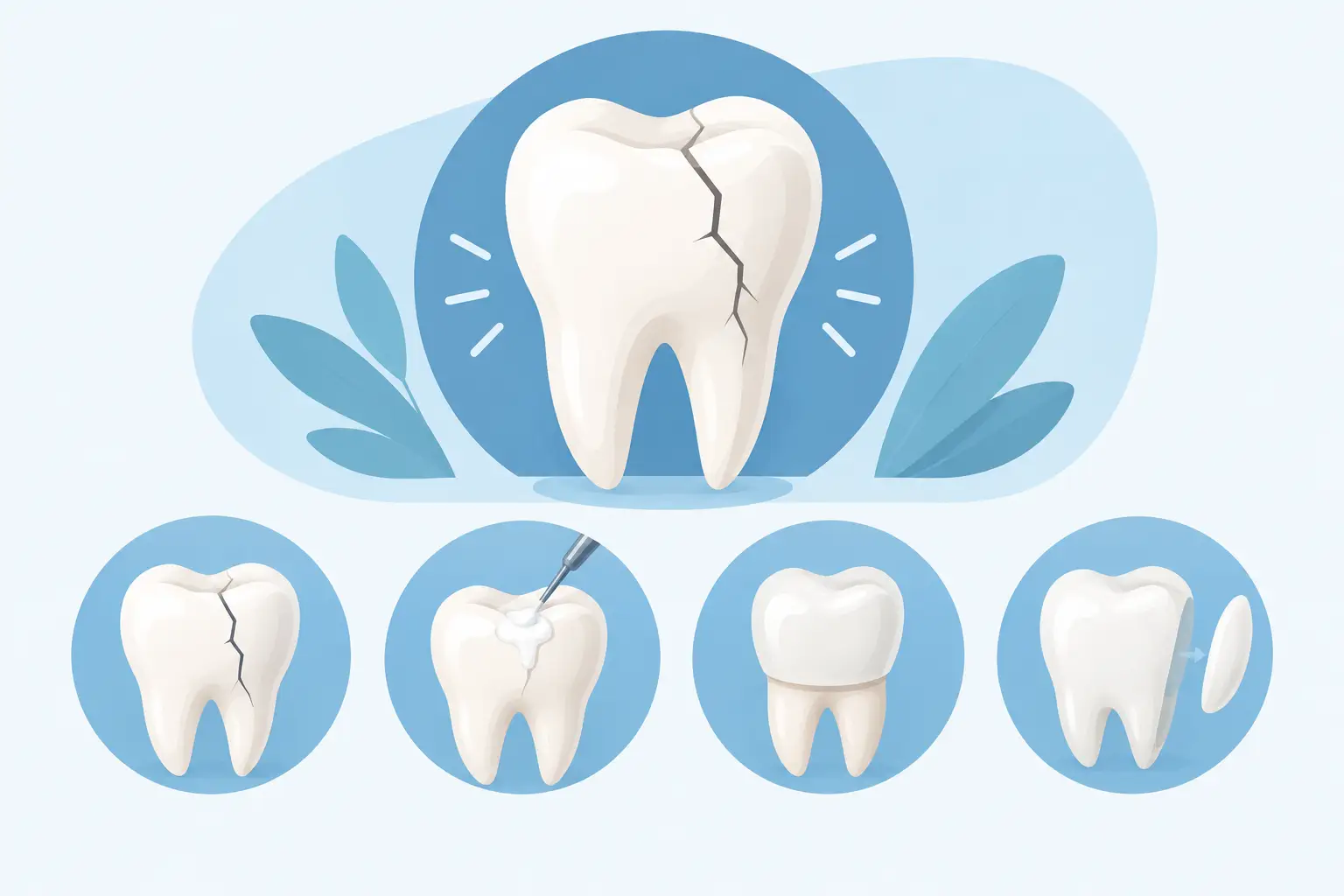
Example 1: A small front-tooth chip repaired with bonding
A patient slips on a sidewalk or bumps a front tooth during sports and loses a small corner of enamel. The tooth is not loose, there is no deep sensitivity, and the chip does not extend close to the nerve. In many cases, composite bonding is a practical repair.
The dentist shades a tooth-colored resin to blend with the natural enamel, shapes it to restore the edge, and hardens it with a curing light. Bonding is usually completed in one visit and preserves more natural tooth structure than a crown. It is also often a more affordable choice for a minor chip.
The trade-off is durability. Bonding can stain, chip, or wear over time, particularly for people who bite pens, chew ice, or grind their teeth. A night guard may help protect the repair when grinding is a concern.
Example 2: A broken cusp on a molar treated with a crown
A common fracture occurs around a large, older filling. A corner or cusp of the molar breaks away while chewing, leaving a rough edge or a hollow area. The nerve may still be healthy, but the tooth is weakened and more likely to crack again under chewing pressure.
When enough healthy tooth remains, a dental crown can cover and reinforce the tooth. The dentist prepares the tooth, takes a digital or traditional impression, and places a temporary crown while the final crown is made. Some cases may be eligible for same-day treatment depending on the tooth and the restoration needed.
A crown is more involved than a filling, but it is often the safer long-term choice for a heavily damaged back tooth. Simply placing another large filling in a tooth with thin walls may not provide the protection it needs.
Example 3: A cracked tooth with pain on biting
A crack does not always leave a visible missing piece. A patient may notice a sharp pain when releasing a bite, sensitivity to cold, or discomfort that comes and goes. This can happen when a crack travels from the chewing surface downward, often in a molar with a large filling or a history of grinding.
If the crack has not reached the pulp, a crown may hold the tooth together and prevent the crack from spreading. Timing matters in this situation. Waiting can allow the crack to deepen, which may turn a crown-only case into one requiring root canal treatment or, in some cases, extraction.
Not every cracked tooth can be saved with a crown. If the crack extends deeply below the gumline or into the root, the prognosis can be limited. An in-person evaluation is the only reliable way to determine where the crack ends.
Example 4: A fracture that reaches the nerve and needs a root canal
Sometimes a tooth breaks deeply enough to expose or inflame the pulp, the soft tissue inside the tooth containing nerves and blood vessels. A patient may have lingering sensitivity to hot or cold, spontaneous throbbing pain, or swelling near the tooth. In other cases, an old fracture may become infected without much warning.
Root canal treatment removes the damaged or infected pulp, cleans the inside of the tooth, and seals it. For many fractured back teeth, a crown is placed afterward because the tooth needs protection from future breakage. The goal is to keep the natural tooth whenever it can be predictably restored.
Root canal treatment has a reputation for being intimidating, but modern care is focused on comfort and infection control. For patients in pain, treating the source of the infection can bring meaningful relief and prevent a more serious dental emergency.
Example 5: A broken tooth below the gumline
A fracture below the gumline is more complicated because it may be difficult to create a secure, clean seal around the restoration. If a dentist cannot access enough healthy tooth structure, a filling or crown may repeatedly fail.
Depending on the tooth and the fracture location, treatment may involve a procedure to expose more tooth structure, followed by a crown. In other situations, the tooth may not be restorable and extraction is the healthier option. Replacing a lost tooth with an implant, bridge, or partial denture can restore chewing ability and help prevent nearby teeth from shifting.
This is one reason a broken tooth should not be judged by appearance alone. What looks like a modest break can be quite deep, while a dramatic-looking chip may be simple to repair.
What to Do Before Your Appointment
If a piece of tooth breaks off, rinse your mouth gently with warm water and save the fragment if you can. It is not always possible to reattach it, but bringing it in may help the dentist assess the fracture. A cold compress against the outside of the face can reduce swelling after an injury.
Avoid chewing on that side and choose soft foods until the tooth is repaired. If there is a sharp edge, dental wax can offer temporary protection for the cheek or tongue. Over-the-counter pain medication may help when it is safe for you to take it as directed, but do not place aspirin directly on the gum or tooth.
Call promptly for severe pain, facial swelling, fever, bleeding that does not stop, a knocked-out tooth, or a fracture caused by a significant blow to the face. Same-day emergency dental care can make a real difference when pain or infection is involved.
How Long Do Repairs Last?
Every restoration has a different expected lifespan. A small bonded repair may last years with good habits, while a well-cared-for crown can provide long-term service. Still, no restoration is indestructible. Grinding, clenching, frequent ice chewing, untreated decay, and missed checkups can shorten its life.
Daily brushing with fluoride toothpaste, cleaning between teeth, and regular dental visits help protect both the repair and the tooth underneath it. If you have a history of clenching or wake with jaw soreness, ask whether a custom night guard could reduce the force placed on your teeth and restorations.
At Quincy High Care Dentistry, the focus is on clear recommendations based on what will protect your tooth and fit your needs, not on one-size-fits-all treatment. If a tooth feels different when you bite, reacts to temperature, or has lost even a small piece, arranging an exam now may give you more repair options and a much calmer path forward.