A dental bridge can restore your smile, help you chew comfortably, and keep nearby teeth from shifting. But food and plaque can collect in places a regular toothbrush cannot reach, especially beneath the artificial tooth. Knowing how to clean dental bridge work correctly is one of the best ways to protect the bridge, the supporting teeth, and your gums for years to come.
The daily routine is not difficult, but it does need to be thorough. A bridge does not get cavities, but the natural teeth holding it in place can. Gum inflammation, decay around the bridge margins, and trapped debris are common reasons a bridge may need repair or replacement sooner than expected.
Why Cleaning Under a Dental Bridge Matters
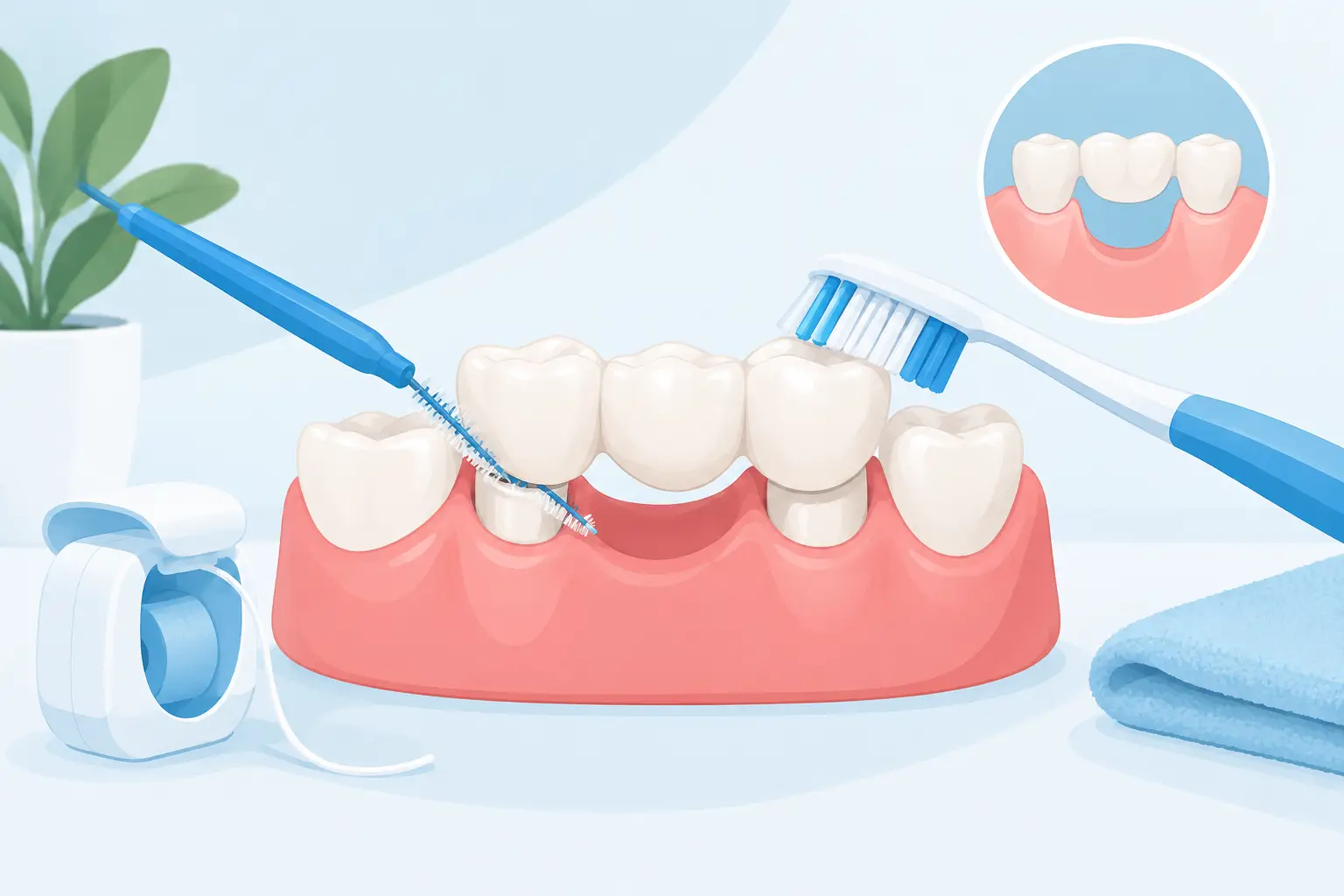
A traditional fixed bridge is attached to natural teeth on either side of a gap. Those supporting teeth are covered with crowns, while the replacement tooth sits above the gumline. Because the replacement tooth is connected to the crowns, you cannot floss between it the same way you would between two natural teeth.
That small space between the bridge and the gumline can trap food, plaque, and bacteria. If it is not cleaned regularly, you may notice bad breath, bleeding gums, tenderness, or an unpleasant taste. Over time, bacteria can contribute to gum disease or decay at the edges of the crowns, where the bridge depends on a healthy seal.
The right approach depends somewhat on the type of bridge you have. A fixed traditional bridge needs cleaning beneath the replacement tooth. An implant-supported bridge requires careful cleaning around the implants and gumline. A removable bridge or partial denture should be taken out and cleaned separately. If you are unsure which type you have, ask your dentist at your next visit.
How to Clean Dental Bridge Work Each Day
For most fixed bridges, a complete home routine takes only a few extra minutes. The goal is to brush every outer surface, clean along the gumline, and remove debris from beneath the artificial tooth.
Brush twice a day with a soft toothbrush
Use a soft-bristled manual or electric toothbrush and fluoride toothpaste. Brush for two minutes, paying close attention to where the bridge crowns meet your natural teeth and gums. Angle the bristles gently toward the gumline rather than scrubbing hard.
Hard brushing does not clean better. It can irritate the gums and wear away at exposed root surfaces around the supporting teeth. An electric toothbrush can be a helpful option for many patients because it provides consistent motion, but a manual brush works well when used carefully and thoroughly.
Clean beneath the bridge with a floss threader or super floss
This is the step that many people miss. Standard floss cannot pass through a fixed bridge, so use a floss threader or dental floss designed with a stiff end, often called super floss. Guide the stiff end underneath the replacement tooth, pull the floss through, then move it gently back and forth under the bridge and along the gumline.
Do not snap the floss against the gums. Instead, use a slow shoeshine motion to wipe the underside of the bridge and remove trapped plaque. Use a fresh section of floss as needed. If your gums bleed a little when you first begin, that can be a sign of inflammation from plaque buildup. Consistent gentle cleaning often improves this, but persistent bleeding deserves a dental evaluation.
Consider an interdental brush
A small interdental brush can be useful for some bridge designs, particularly if there is enough space beneath the artificial tooth. These tiny brushes come in different sizes. The brush should slide in with light resistance, not force.
An interdental brush can help remove food after meals and is convenient for people who find floss threaders difficult to manage. However, it does not replace flossing in every case. Using a brush that is too large or forcing it under the bridge can injure gum tissue or bend the bristles, so ask your dental team which size is appropriate.
Use a water flosser as an added tool
A water flosser sends a stream of water between teeth and around the gumline. It can be especially helpful for flushing out particles under a bridge, around crowns, and in other hard-to-reach areas. Many patients find it easier to use than thread floss, especially if they have limited hand dexterity.
A water flosser is an excellent addition to your routine, but it should not automatically be your only method of cleaning beneath a bridge. Thread floss or an interdental cleaner physically wipes plaque from the surface. For the best result, many patients use both: floss or an interdental brush once daily, then a water flosser for extra rinsing.
A Simple Routine After Meals
You do not need to perform a full flossing routine after every meal. Still, a quick rinse with water can help dislodge food caught around the bridge. This is particularly useful after eating fibrous foods such as salad, popcorn, shredded meat, or corn.
If something is stuck beneath the bridge, avoid using toothpicks, pins, or sharp objects to dig it out. These can cut your gums or damage the bridge. Try rinsing, using a water flosser, or carefully passing a floss threader beneath the bridge instead. If debris will not come out or you feel pain, call your dentist rather than repeatedly poking at the area.
Products to Use and What to Avoid
Fluoride toothpaste remains a smart choice for people with traditional bridges because the supporting teeth are still vulnerable to decay. An alcohol-free antimicrobial mouth rinse may be recommended if you have gum inflammation, dry mouth, or a history of periodontal disease. Your dentist can recommend the right product for your specific needs.
Avoid abrasive whitening toothpaste unless your dentist says it is appropriate. These products may not whiten a bridge, crown, or other dental restoration because their color does not change like natural enamel. Aggressive abrasive products can also make surrounding natural teeth wear unevenly over time.
Be cautious with over-the-counter whitening strips as well. They can brighten natural teeth but will not change the shade of the bridge. This may make the bridge look darker by comparison. If the color of your bridge bothers you, a dental visit is the better place to discuss options.
Signs Your Bridge Needs Professional Attention
A well-fitting bridge should feel secure and comfortable. Mild gum sensitivity when you first improve your cleaning routine can happen, but ongoing symptoms should not be ignored. Contact your dentist if you notice any of the following:
- Bleeding, swollen, or receding gums around the bridge
- Persistent bad breath or a bad taste despite regular cleaning
- Pain when chewing, sensitivity in a supporting tooth, or pressure around the bridge
- A bridge that feels loose, moves, cracks, or catches floss unexpectedly
- Food trapping that suddenly becomes worse or is impossible to clean out
Do not try to glue a loose bridge back in place with household adhesive. Store-bought glue can damage the restoration and make professional repair more difficult. A loose bridge can also expose the supporting teeth to decay, so it is worth arranging care promptly.
Keep Up With Professional Cleanings
Home care protects your bridge every day, but routine dental exams and professional cleanings remain essential. Your hygienist can clean areas around the bridge that are difficult to reach at home and check for early signs of gum disease, decay, wear, or a changing fit.
At Quincy High Care Dentistry, we take a practical, patient-first approach to restorative care. During regular visits, we can review your bridge-cleaning technique, recommend tools that fit your needs, and address concerns before they become more complicated or costly.
A bridge should make daily life easier, not create a source of worry. Give the area beneath it a few focused minutes each day, and if it starts feeling different, uncomfortable, or hard to clean, let a dental professional take a look.