A missing tooth can affect more than your smile. It can change how you chew, make certain foods uncomfortable, and leave nearby teeth without the support they need. This guide to the dental implant process explains what treatment usually involves, how long it can take, and the practical questions to ask before you decide.
Dental implants are designed to replace a tooth from the root up. They can be an excellent long-term option for many adults, but they are not a one-visit solution for everyone. A careful exam and a treatment plan built around your health, bone structure, and goals make the difference.
What a Dental Implant Actually Replaces
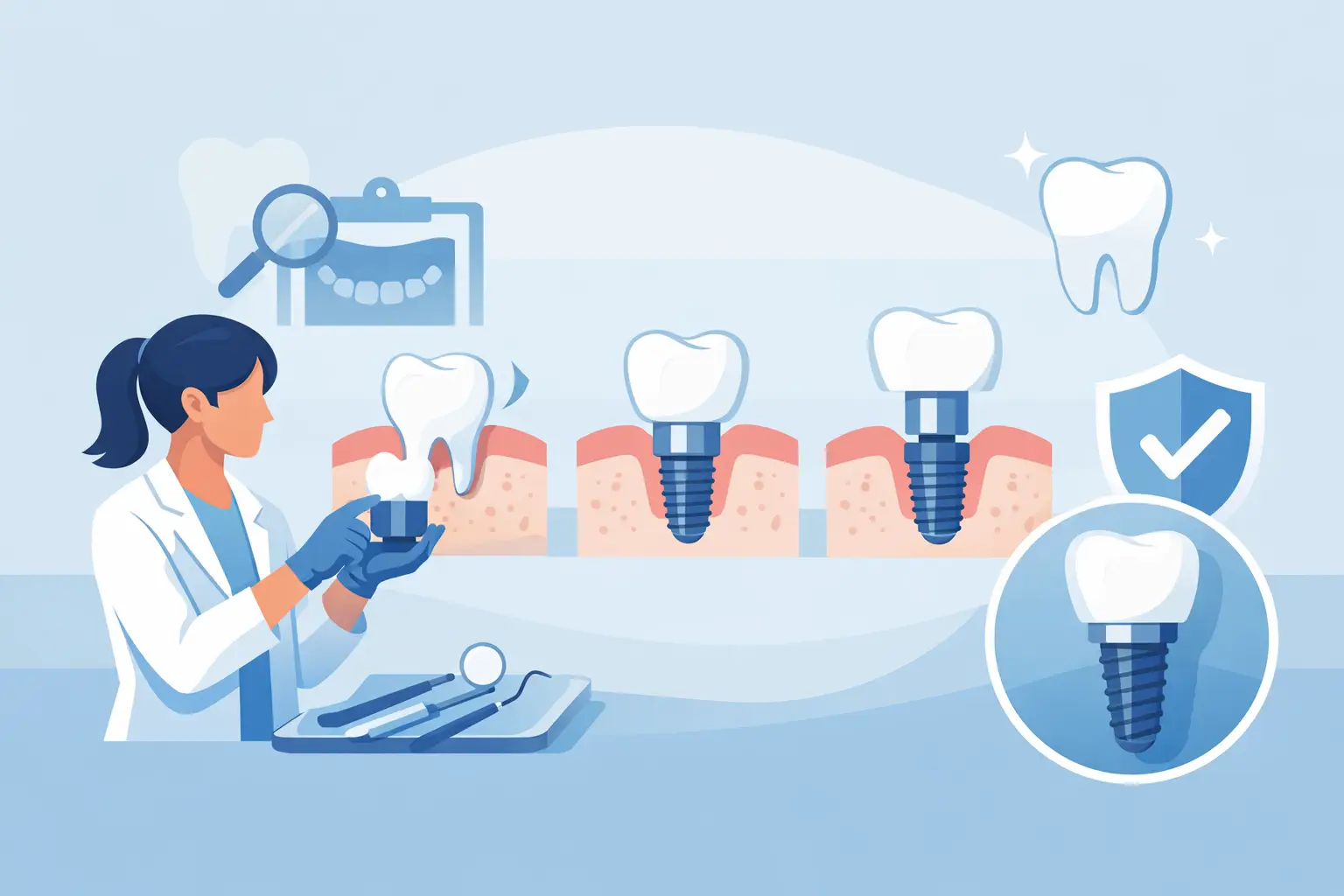
A dental implant has three main parts. The implant itself is a small post, usually made from titanium, that is placed in the jawbone to act like a tooth root. An abutment connects that post to the visible replacement tooth. The crown is the custom-made tooth that sits above the gumline.
For patients replacing several teeth, implants may also support a bridge or help stabilize a denture. The right option depends on how many teeth are missing, the condition of the remaining teeth, your jawbone, and your budget. A single implant is not always the answer, but it is often worth discussing before choosing a removable appliance.
Guide to the Dental Implant Process: The Main Steps
Every case has its own timeline, yet most implant treatment follows a clear sequence. Knowing what happens at each stage can make the process feel much more manageable.
1. Consultation and treatment planning
Your first visit begins with a conversation about your dental history, medications, concerns, and goals. The dentist examines your teeth and gums and takes the appropriate X-rays or 3D imaging to evaluate the bone beneath the missing tooth.
This planning stage answers the most important questions: Is there enough healthy bone to hold an implant? Are gum disease, decay, or infection present? Is an implant the best choice for the space? Your dentist may also review alternatives, such as a bridge or partial denture, so you can compare treatment, timing, and cost honestly.
For some patients, the path is straightforward. For others, treatment may need to begin with a cleaning, periodontal care, extraction, or bone graft. Addressing those issues first protects the investment you are making in your smile.
2. Preparing the site, if needed
If a damaged tooth must be removed, the extraction may happen before implant placement. In some cases, an implant can be placed at the same appointment as the extraction. In other cases, the area needs time to heal first. The choice depends on infection, bone quality, and the stability needed for a successful result.
A bone graft may be recommended when the jawbone is too thin or has shrunk after a tooth has been missing for some time. This sounds more involved than it often feels, but it does add healing time. The goal is simple: create a strong foundation for the implant rather than rushing into placement where support is limited.
3. Implant placement
During the surgical appointment, the dentist numbs the treatment area and places the implant post into the jawbone. Patients often compare the recovery to a tooth extraction, although each experience is different. You may feel pressure during the procedure, but you should not feel sharp pain.
Afterward, mild swelling, tenderness, or bruising can occur for several days. Most patients manage this with the care instructions provided, soft foods, and recommended medication. It is wise to plan a quieter day after surgery and avoid strenuous exercise until your dentist says it is appropriate.
4. Healing and bone integration
The most patient part of the dental implant process is healing. Over the following months, the jawbone gradually bonds with the implant in a process called osseointegration. That bond is what gives an implant its stability.
Healing time varies. It may be shorter when the bone is healthy and the implant is stable at placement, while grafting or more complex treatment can extend the timeline. Your dentist will monitor healing at follow-up visits and let you know when the implant is ready for the final restoration.
Some patients receive a temporary tooth during this period, particularly when the missing tooth is visible in the smile. A temporary restoration can help with appearance, but it must be treated gently while the implant heals.
5. Abutment and final crown
Once the implant is ready, the abutment is attached if it was not placed earlier. Your dentist then takes impressions or digital scans to create a crown that fits your bite and blends naturally with your surrounding teeth.
At the final appointment, the crown is secured to the implant and adjusted carefully. The dentist checks how it feels when you bite, how it contacts neighboring teeth, and how it sits along the gumline. A well-made implant crown should look natural and feel comfortable in daily life.
Are You a Good Candidate for an Implant?
Many healthy adults can be candidates for dental implants, including people who have worn a bridge or denture for years. Good gum health and adequate jawbone are helpful, but a bone graft or other treatment may make implants possible even when those conditions are not ideal at first.
Smoking, uncontrolled diabetes, active gum disease, heavy teeth grinding, and certain medical conditions can affect healing and long-term success. None of these automatically means implants are off the table. They do mean your dentist needs a complete picture and may recommend additional precautions or another restorative option.
The strongest candidates are prepared to care for the implant after treatment. An implant cannot get a cavity, but the gum tissue and bone around it can become inflamed or infected without consistent home care and regular dental visits.
How Long Does Dental Implant Treatment Take?
A simple implant case may be completed in a few months. A case involving extraction, infection treatment, or bone grafting can take six months or longer. That timeline can feel inconvenient when you want the space restored quickly, but healing is part of what makes an implant durable.
Ask your dentist for a timeline based on your specific needs, not a general estimate. You should understand what appointments are needed, whether a temporary tooth is possible, and when you can expect to receive the final crown.
Understanding Cost, Insurance, and Value
Dental implant treatment is an investment because it includes planning, surgery, components, and the final restoration. The total cost can vary significantly based on the tooth location, the need for grafting or extraction, the type of restoration, and the complexity of your case.
Insurance coverage varies as well. Some plans may contribute toward related services, such as an extraction, crown, or imaging, even if they do not cover every implant component. Before treatment begins, ask for a clear estimate and have the office review your benefits. Straightforward financial information helps you plan without surprises.
It is also useful to weigh cost against the expected service life and function. A bridge may have a lower initial cost, but it can require altering adjacent healthy teeth. A removable denture may be more affordable upfront, but it may move while chewing and does not provide the same root-like support. There is no single best choice for every patient.
Caring for Your Implant After Treatment
Implants need the same daily attention as natural teeth. Brush thoroughly twice a day, clean between teeth every day, and keep scheduled cleanings and exams. Your dentist may recommend a specific brush, flossing method, or interdental cleaner based on the location of your implant and the type of restoration.
Call the office if you notice persistent bleeding, swelling, pain when biting, looseness, or a change in how the crown fits. Early attention can prevent a small concern from becoming a more difficult problem. Avoid using teeth to open packages or chew hard objects, and consider a nightguard if you grind or clench.
A dental implant should never feel like a decision you have to make under pressure. Take the time to ask questions, understand your options, and choose a plan that supports your health, comfort, and everyday routine. For patients in Quincy and the South Shore, a personal consultation can turn uncertainty into a clear next step.