A cracked tooth during dinner, a child’s knocked-out tooth at practice, or a throbbing toothache that keeps you awake can quickly become more than an inconvenience. This guide to emergency dental care explains how to recognize a true dental emergency, protect your mouth before treatment, and get the right help without unnecessary delay.
Dental problems rarely improve by being ignored. Prompt care can often relieve pain, prevent an infection from spreading, and give your dentist a better chance of saving a natural tooth. Just as important, knowing what to do in the first few minutes can make a stressful situation feel much more manageable.
What Counts as a Dental Emergency?
A dental emergency is a problem involving significant pain, bleeding, infection, a damaged tooth, or an injury to the mouth that needs prompt professional attention. Not every dental concern requires a same-day visit, but some symptoms should never wait for a routine appointment.
Call a dentist promptly if you have severe or persistent tooth pain, a tooth that has been knocked loose or completely out, a broken tooth with sharp edges or exposed inner tissue, facial swelling, uncontrolled bleeding, or a lost filling or crown that is causing pain. Swelling around a tooth can signal an abscess, which is an infection that needs timely care.
There is an important difference between urgent dental care and a medical emergency. If swelling affects your ability to breathe or swallow, spreads toward your eye or neck, or is accompanied by a high fever or confusion, call 911 or go to the nearest emergency room. An emergency room can help stabilize serious infection or trauma, while a dentist is the best place for treatment that addresses the tooth itself.
Guide to Emergency Dental Care: What to Do First
Your first goal is to protect the injured area and control discomfort until you can be seen. Call your dental office as soon as possible and describe what happened, when it started, and whether you have swelling, bleeding, fever, or a loose tooth. Clear details help the team determine how quickly you need to be evaluated.
For bleeding after an injury or extraction, apply steady, gentle pressure with clean gauze. A cold compress on the outside of the cheek can help reduce swelling and discomfort after trauma. Avoid placing aspirin directly on a tooth or gum tissue. It can irritate the tissue and does not treat the cause of the pain.
If medication is safe for you, an over-the-counter pain reliever may help temporarily when taken according to the label. However, pain relief should not be treated as a substitute for an exam. A toothache may come and go even when decay, a crack, or infection is getting worse underneath.
When a Tooth Is Knocked Out
Time matters most when a permanent tooth has been knocked out. Handle the tooth only by the crown, which is the chewing surface, not the root. If it is dirty, rinse it briefly with milk or clean water without scrubbing it.
If possible, gently place the tooth back into its socket and have the person bite lightly on gauze to hold it in place. If that is not possible, keep the tooth moist in milk or in the person’s saliva by placing it inside the cheek if they are old enough to do so safely. Seek emergency dental care immediately. A dentist may have the best chance of saving the tooth when treatment happens quickly.
Do not try to reinsert a baby tooth. Doing so could damage the developing permanent tooth below it. Call a dentist for guidance, especially if there is bleeding, pain, or concern about other facial injuries.
When a Tooth Is Cracked or Broken
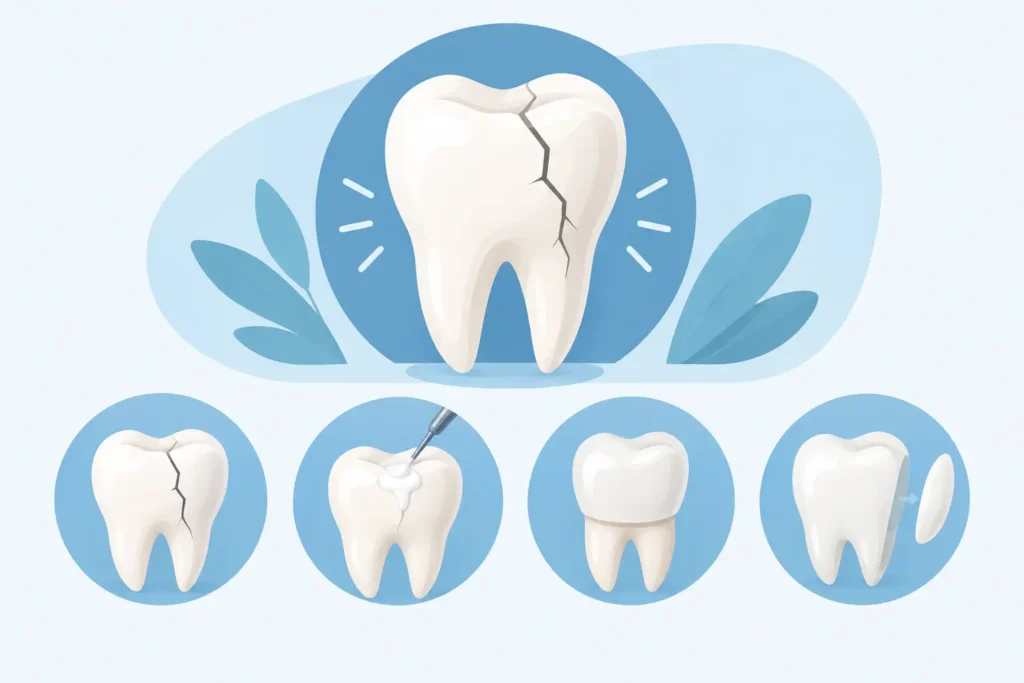
Rinse your mouth gently with warm water and save any broken pieces if you can find them. Cover a sharp edge with dental wax or sugar-free gum only as a short-term measure, and avoid chewing on that side. A small chip may be able to wait briefly if there is no pain or sharp edge, but a larger break, intense sensitivity, or visible red or pink tissue inside the tooth calls for prompt care.
A crack can be deceptive. Even when a tooth looks mostly intact, pain when biting or sensitivity to cold may mean the crack extends below the surface. Early treatment may allow a dentist to restore the tooth with bonding or a crown. Waiting can allow bacteria into the tooth, sometimes leading to the need for root canal treatment or extraction.
When a Crown or Filling Comes Out
A lost crown or filling is not always an immediate emergency, but it should be addressed soon. The remaining tooth may be sensitive, weak, or more likely to fracture. Keep the crown if you have it, rinse it gently, and bring it to your appointment.
Avoid chewing hard or sticky foods on that side. Do not use household glue to put a crown back in place. Temporary dental cement from a pharmacy may be appropriate for some patients, but it is best to ask your dentist first because the right next step depends on the tooth, the crown, and the reason it came loose.
Signs of a Dental Infection That Should Not Wait
An abscess is a pocket of infection that can form near the root of a tooth or along the gums. It may cause a constant ache, swelling, a bad taste in the mouth, tenderness when biting, or a small pimple-like bump on the gums. Some people notice pain, while others have little discomfort once the infection begins to drain. Neither situation is safe to ignore.
Antibiotics may be needed in some cases, particularly when infection is spreading, but they do not remove the source of infection inside a tooth. Treatment may involve draining the infection, root canal treatment, or removing a tooth that cannot be saved. The right approach depends on the exam and X-rays, as well as the condition of the tooth and surrounding bone.
What to Expect at an Emergency Dental Visit
An emergency visit should focus first on comfort, diagnosis, and a practical plan. Your dentist will ask about your symptoms and medical history, examine the area, and may take X-rays to look for fractures, infection, or damage below the gumline.
Sometimes definitive treatment can be completed the same day. Other times, the immediate priority is relieving pain, stabilizing the tooth, treating infection, or placing a temporary restoration before a longer procedure. This is not a sign that your care is incomplete. It is often the safest way to handle a complicated problem while giving you relief quickly.
At Quincy High Care Dentistry, same-day emergency visits are designed to help patients get clear answers and timely treatment without added confusion. Bring your insurance information, a list of medications, and any broken tooth pieces or lost restorations when possible. Most importantly, be honest about when symptoms began and what makes them worse.
How to Avoid a Repeat Emergency
Not every emergency can be prevented, especially accidents and sports injuries. Still, regular exams give your dentist a chance to identify small cracks, worn fillings, gum disease, and decay before they become painful. A custom mouthguard can also help protect teeth during contact sports, while a nightguard may help patients who grind or clench their teeth.
Do not use your teeth to open packages, cut fishing line, or crack hard objects. These habits can turn a small weakness into a broken tooth in seconds. If you have a temporary crown, a loose filling, or a tooth that hurts when you bite, schedule care before it becomes an after-hours problem.
When something feels wrong, trust that instinct. A prompt call to a trusted local dentist can turn a frightening dental problem into a clear next step – and help protect the smile you rely on every day.