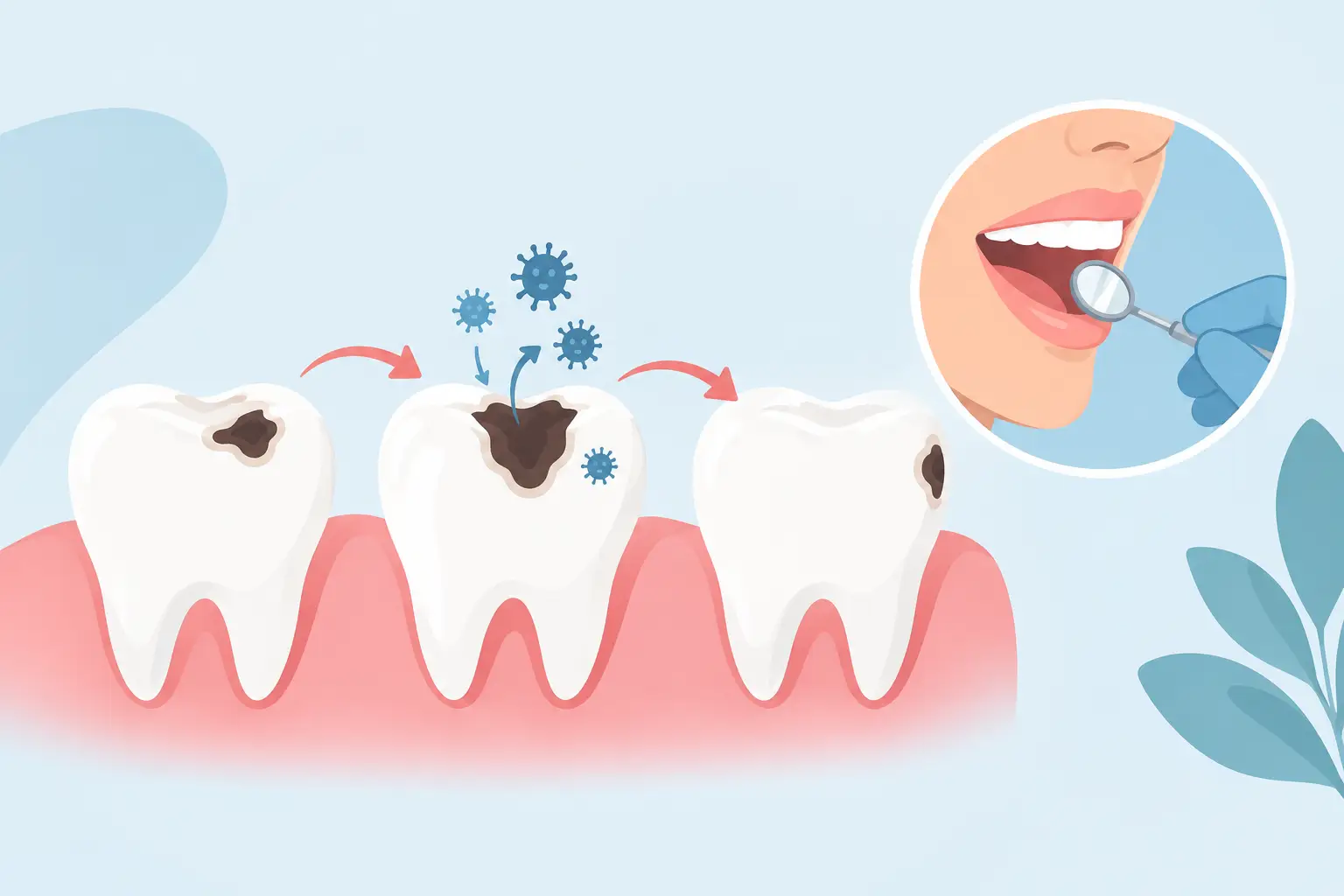
A cavity may start as a tiny weak spot that causes no pain at all, then turn into a problem that affects eating, sleep, work, or school. So, can cavities spread? Not in the way a cold spreads from one person to another, but the bacteria and conditions that cause tooth decay can be shared. And without treatment, decay can grow deeper into the same tooth and raise the risk of cavities in nearby teeth.
That distinction matters because it gives you a practical next step. A cavity is not a reason to panic or feel embarrassed. It is a reason to schedule an exam, find out how far the decay has progressed, and treat it before a smaller filling becomes a more involved procedure.
Can Cavities Spread From Tooth to Tooth?
A cavity itself is permanent damage to one tooth. It cannot move across your mouth or jump to another tooth. However, the bacteria involved in tooth decay can thrive throughout the mouth, especially where plaque is allowed to build up.
Tooth decay begins when oral bacteria feed on sugars and starches left on teeth. They produce acids that weaken enamel, the protective outer layer of the tooth. When this cycle repeats often enough, enamel breaks down and a cavity forms.
If a tooth has an untreated cavity, the same plaque and bacteria may also collect around neighboring teeth, particularly where teeth touch. Back teeth are especially vulnerable because their grooves are harder to clean and food can become trapped between them. A cavity in one area is often a sign that the mouth needs more protection overall, not that the hole itself has traveled.
This is why dental exams look at every tooth, not only the one that hurts. Early decay can be difficult to see without a professional evaluation and, when appropriate, dental X-rays.
Can You Catch Cavities From Someone Else?
Cavities are not contagious in the usual sense. You will not develop a cavity simply by sitting near someone who has one. But the bacteria associated with decay can be transferred through saliva.
For example, bacteria may be shared by kissing, sharing utensils or drinks, or putting a child’s pacifier in an adult’s mouth before giving it back. This does not mean every shared utensil causes decay. A person develops a cavity only when several factors work together over time: cavity-causing bacteria, frequent sugar exposure, plaque buildup, tooth structure, dry mouth, and inconsistent fluoride protection.
Parents and caregivers should be especially mindful with babies and young children because their oral bacteria are still developing. Avoid sharing toothbrushes, tasting food with the same spoon, or cleaning a pacifier with your mouth. These simple habits can help reduce bacterial transfer without turning normal family life into a source of worry.
The most effective protection is still routine oral care. Brushing with fluoride toothpaste, cleaning between teeth when appropriate, limiting frequent sugary snacks and drinks, and keeping regular dental visits all make a meaningful difference.
Why Untreated Decay Gets Worse
Tooth decay does not heal once a true cavity has formed. Very early enamel weakening may sometimes be strengthened with fluoride and changes in daily care, but a hole in the tooth generally needs dental treatment.
Decay usually progresses from enamel into dentin, the softer layer beneath it. Once bacteria reach dentin, the cavity can enlarge more quickly. A tooth may become sensitive to cold, sweets, or biting pressure. Some people notice a dark spot or rough area, while others have no visible signs at all.
If decay reaches the pulp, the living tissue inside the tooth, it can cause severe pain, inflammation, or infection. At that point, treatment may require root canal therapy and a crown rather than a simple composite filling. In some cases, an infection can lead to facial swelling or an abscess.
The trade-off is straightforward: waiting may seem easier when a tooth is not hurting, but early care is usually simpler, more comfortable, and less costly than treating advanced decay. A dentist can tell you whether a filling, crown, root canal, or another option is appropriate for your specific tooth.
Signs You Should Schedule a Dental Visit
Pain is a clear reason to call, but it is not the only one. Tooth decay can remain quiet until it becomes more serious. Schedule a dental appointment if you notice ongoing sensitivity, pain when chewing, food repeatedly catching between certain teeth, a visible pit or dark area, a chipped tooth, or a filling that feels broken or loose.
You should seek prompt dental care for swelling in the gums, face, or jaw; a pimple-like bump on the gums; fever along with dental pain; or a bad taste that will not go away. These can be signs of infection. Facial swelling, trouble swallowing, or difficulty breathing requires urgent medical attention.
For South Shore families dealing with sudden tooth pain, same-day emergency dental care can help identify the source of the problem and provide a clear treatment plan. Pain medication may offer temporary relief, but it does not remove decay or treat an infection.
How to Keep One Cavity From Becoming Several
The goal is not perfection. It is reducing the repeated acid attacks that weaken teeth and catching changes early. Start by brushing twice a day for two minutes with fluoride toothpaste. Spit out the toothpaste after brushing, but avoid rinsing heavily with water so the fluoride can remain on the teeth longer.
Clean between teeth once a day with floss or another dentist-recommended interdental cleaner. This matters because toothbrush bristles do not effectively clean the tight surfaces where many cavities begin.
Try to reduce how often teeth are exposed to sugar and acidic drinks. A dessert with a meal is generally easier on teeth than sipping soda, sports drinks, sweetened coffee, or juice over several hours. Water is the best everyday choice between meals. If you do have something sweet or acidic, rinsing with water afterward can help.
Dry mouth also raises cavity risk because saliva helps wash away food and neutralize acids. Certain medications, mouth breathing, dehydration, and some health conditions can contribute to dry mouth. Mention it at your appointment, especially if you wake with a dry mouth or feel that you are getting cavities more often than before.
Regular cleanings and exams are part of prevention, not just a response to pain. Depending on your cavity risk, your dentist may recommend fluoride treatment, dental sealants for children, more frequent visits, or personalized guidance on home care.
What Treatment May Look Like
A small cavity is often treated with a composite filling. The dentist removes the decayed portion of the tooth and restores its shape and function with a tooth-colored material. When decay or a fracture is more extensive, a crown may be recommended to protect the remaining tooth structure.
If infection has reached the pulp, root canal treatment can remove the infected tissue, relieve pain, and help save the natural tooth. The tooth is then typically protected with a restoration, often a crown. Extraction is usually considered when a tooth cannot be predictably saved or when it is the healthiest option for the patient.
The right treatment depends on the location and size of the cavity, the condition of the tooth, your bite, and your overall oral health. An exam gives you facts instead of guesses, along with the chance to discuss timing, insurance, and affordable care options before the issue becomes urgent.
A cavity does not have to become a major dental problem. If you are concerned about a new sensitivity, an old filling, or a child who may have decay, a timely visit can bring clarity and relief. Quincy High Care Dentistry is here to provide straightforward, personalized care so you and your family can move forward with confidence.