A denture can look clean at a glance and still hold plaque, food particles, and odor-causing bacteria in the small areas that touch your gums. Knowing how to care for dentures protects more than the appliance itself. It helps keep your mouth comfortable, your breath fresh, and your dentures fitting as they should.
The routine does not need to be complicated or expensive. What matters is using gentle cleaning methods every day, handling dentures carefully, and calling your dentist when the fit changes instead of trying to fix the problem at home.
How to Care for Dentures Every Day
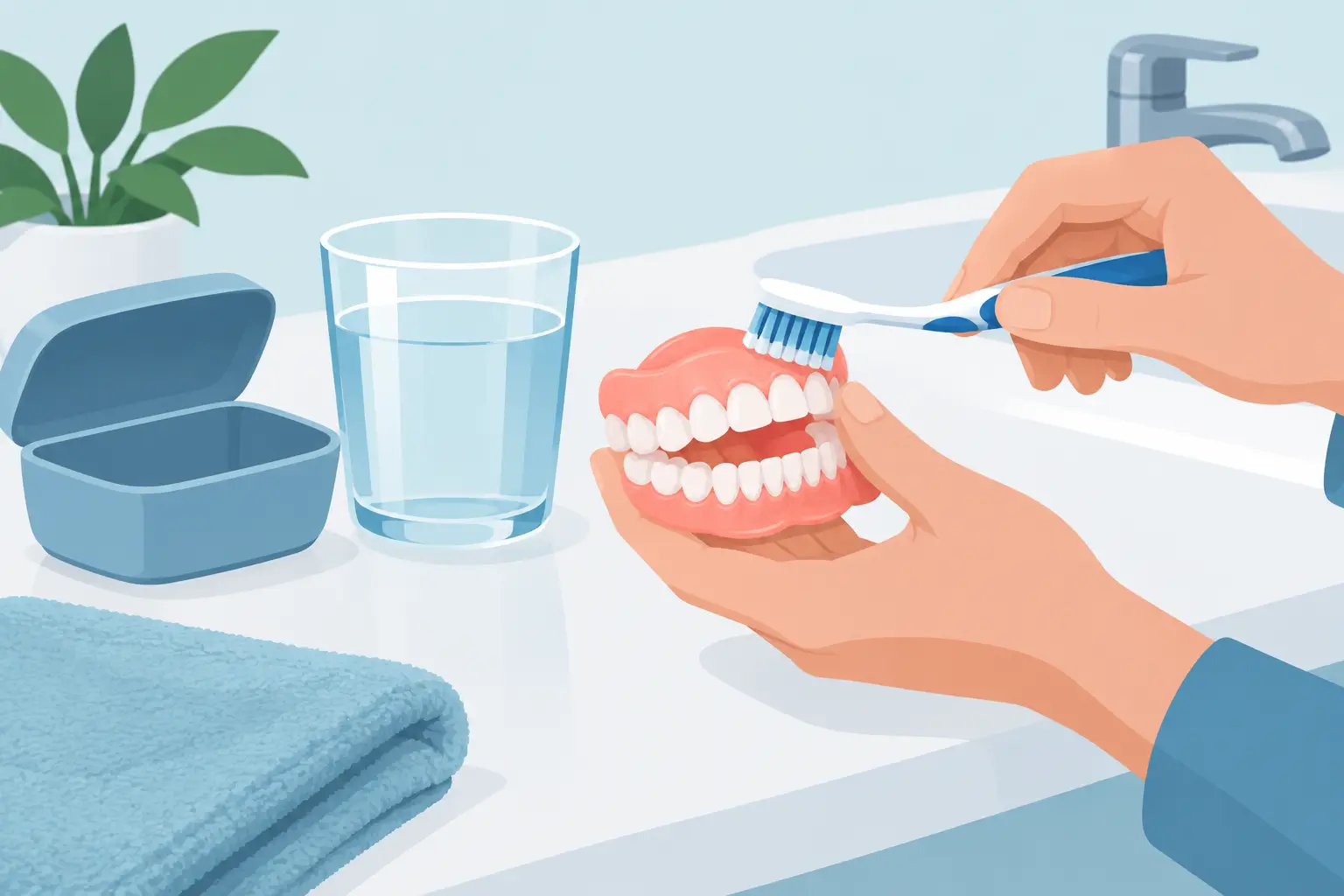
Start by rinsing your dentures after meals whenever possible. Hold them over a folded towel or a sink partly filled with water while you rinse. Dentures can crack or break if they fall onto a hard countertop or into an empty sink, and even a small chip can affect comfort and fit.
At least once a day, remove your dentures and brush them with a soft denture brush or a soft-bristled toothbrush reserved for this purpose. Use a nonabrasive denture cleanser or mild liquid soap. Brush every surface, including the area that rests against your gums, the grooves around the teeth, and any clasps on a partial denture.
Regular toothpaste is usually too abrasive for dentures. Over time, it can leave tiny scratches in the material. Those scratches can collect stains and bacteria, making the denture harder to clean and more likely to develop odors. Household cleaners, whitening products, and powdered cleansers can also damage dentures and should stay out of your routine.
After brushing, rinse thoroughly before placing dentures back in your mouth. If you use denture adhesive, remove all adhesive from both the denture and your gums each day. A soft toothbrush, damp washcloth, or gauze can help clean your gums gently.
Clean Your Mouth, Not Just the Dentures
Dentures replace missing teeth, but they do not replace the need for oral hygiene. Brush your gums, tongue, palate, and any remaining natural teeth each morning and night. This removes plaque and stimulates circulation in the gum tissue.
If you wear a partial denture, be especially thorough around the natural teeth that support it. Plaque can build up around clasps and along the gumline, raising the risk of cavities and gum disease. Floss the natural teeth that remain, unless your dentist has given you different instructions.
A dry mouth can make dentures feel loose, increase friction, and make it easier for bacteria to grow. Sipping water throughout the day may help. If dry mouth is persistent, especially after starting a medication, bring it up at your next dental visit so your dentist can suggest practical options.
Soak Dentures Safely When They Are Out
Most conventional removable dentures should be taken out at night. Your gums and jaw tissues need time without constant pressure, and removing dentures overnight gives you a better opportunity to clean both the appliance and your mouth.
Keep dentures moist when they are out. They can lose their shape if they dry out. Place them in plain water or a denture-soaking solution recommended for your type of denture. Use cool or lukewarm water, never hot water. Heat can warp the base, and a warped denture may no longer sit properly on your gums.
The best soaking solution depends on the material. Dentures with metal clasps or components may require a cleaner specifically labeled as safe for metal. Products containing bleach can discolor or corrode metal parts. If you are unsure what your denture is made from, ask your dental office before choosing a soaking product.
There are exceptions to the overnight rule. Immediate dentures, which are placed right after teeth are removed, may need to stay in overnight during the first day or as directed by your dentist. Implant-supported removable dentures may also have specific care instructions. Follow the plan provided for your own treatment rather than relying on general advice.
Eat Comfortably While You Adjust
New dentures often require an adjustment period. Your cheeks, tongue, and gums are learning to work with a different shape in your mouth, and it is normal for eating and speaking to feel unfamiliar at first.
Begin with softer foods cut into small pieces. Chew slowly and use both sides of your mouth at the same time to help keep dentures stable. As you gain confidence, gradually return to more varied foods. Very sticky foods, hard nuts, tough meats, and foods with small seeds can be challenging for some denture wearers. You do not always have to avoid them forever, but it may take practice and good denture fit to eat them comfortably.
A small amount of adhesive may improve confidence for some patients, particularly while getting used to a new denture. Adhesive should not be used to compensate for a denture that is loose, painful, or broken. If you need more adhesive than usual or your denture starts moving during meals, schedule an evaluation. The denture may need an adjustment, reline, or replacement.
Watch for Changes in Fit and Comfort
Your mouth changes over time, even after all teeth have been removed. Gum tissue and jawbone gradually change shape, so a denture that once fit well can become loose months or years later. A professional reline can sometimes restore the fit by reshaping the surface that contacts your gums.
Call your dentist if you notice persistent sore spots, rubbing, clicking, a change in speech, difficulty chewing, recurring mouth sores, or a denture that slips more than it used to. Redness beneath a denture, a burning feeling, or white patches in the mouth can also signal irritation or infection that needs professional attention.
Do not try to adjust clasps, glue a crack, or smooth a rough edge yourself. Store-bought repair kits and household glue can contain materials that are not safe for the mouth, and an at-home repair may make a professional repair more difficult. Keep any broken pieces and bring them to your dentist.
Keep Regular Dental Visits
Even if you no longer have natural teeth, regular dental visits still matter. Your dentist checks the fit and condition of your dentures, examines your gums and oral tissues, and screens for concerns that may not cause obvious symptoms early on.
A visit is also the right time to discuss whether your current denture still meets your needs. Some patients benefit from a reline, while others may need a new denture or want to discuss implant-supported options for added stability. The right choice depends on your oral health, bone support, comfort, budget, and day-to-day goals.
For patients in Quincy and the South Shore, Quincy High Care Dentistry can help with denture adjustments, repairs, relines, and ongoing oral care. A timely appointment can often prevent a small comfort issue from becoming a larger problem.
A clean denture should feel like a reliable part of your day, not something you have to work around. Give it a gentle daily routine, protect it from heat and falls, and let your dental team handle changes in fit before discomfort gets in the way.