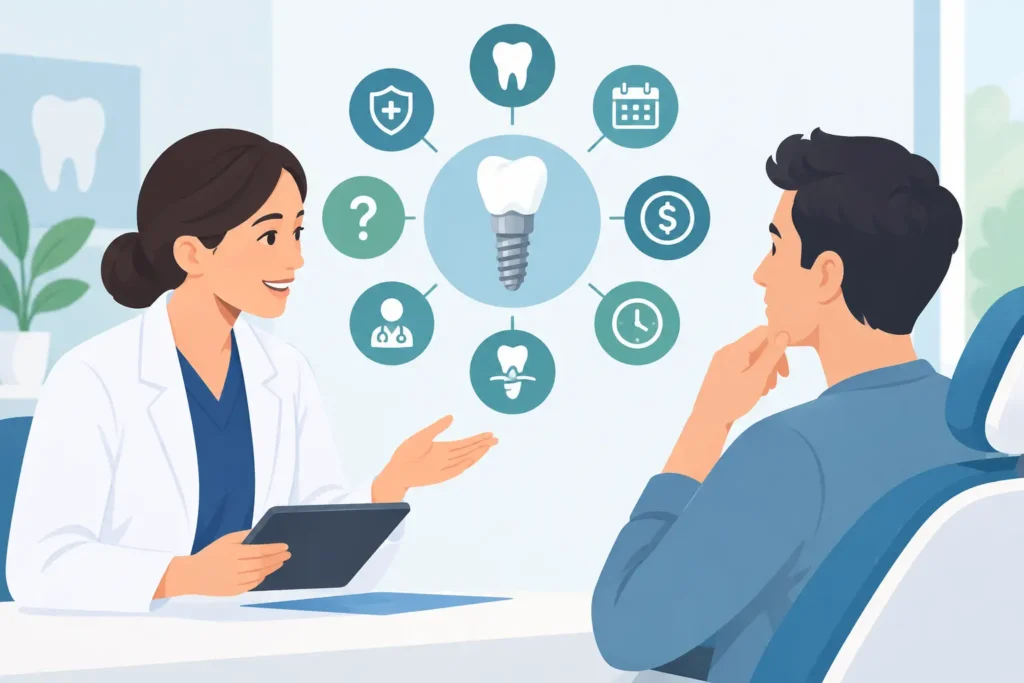
A dental implant can restore far more than a missing tooth. It can make meals easier, support clearer speech, and help you smile without feeling self-conscious. The procedure is only one part of the process, though. This guide to dental implant aftercare explains how to protect the surgical area, stay comfortable, and recognize when it is time to contact your dentist.
Your personal instructions should always come first. Implant treatment can involve a simple placement, a bone graft, a sinus lift, an extraction, or several teeth at once. Each situation heals a little differently, so follow the plan provided by your dental team even if it differs from general advice online.
Dental Implant Aftercare: The First 24 Hours
The first day is about protecting the blood clot and letting the area settle. If gauze was placed over the surgical site, bite with steady, gentle pressure for the amount of time your dentist recommends. A small amount of oozing or pink saliva is common. Do not repeatedly lift your lip or pull at the gauze to check the site, since that can restart bleeding.
Rest with your head slightly elevated and keep your day low-key. Avoid heavy lifting, strenuous exercise, and bending over for long periods. These activities can increase blood flow and make bleeding or throbbing more noticeable.
Use a cold pack on the outside of the face if your dentist recommends it. Short, on-and-off applications can help limit swelling and soreness. Swelling often becomes more noticeable over the next two or three days before it begins to improve, so a little puffiness is not automatically a problem.
Do not rinse forcefully, spit hard, use a straw, or smoke during the early healing period. Suction and pressure can disturb the surgical area. Alcohol can also interfere with healing and may not be safe with prescribed pain medicine or antibiotics.
Managing Pain, Swelling, and Medication
Mild to moderate tenderness is expected after implant surgery. Take prescribed or recommended pain medicine exactly as directed, ideally before numbness has fully worn off if your dentist has advised that approach. Do not combine medications or exceed the label dose. If you are unsure whether an over-the-counter medicine is safe with your health history or current prescriptions, call the office first.
Antibiotics are not necessary for every implant procedure, but if you receive them, take them as prescribed and finish the course unless your dentist tells you otherwise. Contact the office promptly if you develop a rash, itching, trouble breathing, severe stomach symptoms, or another possible medication reaction.
Discomfort should gradually improve, not suddenly become much worse after several days. A sharp increase in pain, swelling that continues to expand, fever, or a bad taste with drainage deserves a call. Early attention can prevent a manageable concern from becoming a larger problem.
What to Eat While Your Implant Heals
Choose soft, nourishing foods once the numbness is gone. Yogurt, scrambled eggs, oatmeal, soups that are warm rather than hot, mashed vegetables, pasta, and smoothies eaten with a spoon are often comfortable options. Hydration matters too, especially if you are taking medication.
Avoid chewing directly over the implant site. This is especially important if a temporary tooth, healing cap, or temporary denture is in place. Even when the area feels fine, the implant is still bonding with the jawbone beneath the gumline.
For the first stage of healing, avoid hard, crunchy, sticky, and crumbly foods. Nuts, popcorn, chips, crusty bread, seeds, chewy candy, and tough meat can irritate the site or become trapped around it. Very hot foods and drinks may increase bleeding or discomfort early on.
How quickly you return to a regular diet depends on the procedure and your dentist’s plan. A single straightforward implant may have fewer restrictions than treatment involving grafting or multiple implants. Do not test the area by chewing on it just because soreness has faded.
Keeping Your Mouth Clean Without Disturbing the Site
Good oral hygiene supports healing, but the surgical area needs a gentle approach. On the day of surgery, do not brush directly over the site unless you have been instructed to do so. You can usually brush and floss the other teeth carefully, keeping your toothbrush away from the incision.
Beginning when your dentist directs, use a gentle warm saltwater rinse. Let the rinse move around your mouth without vigorous swishing, then allow it to fall out rather than forcefully spitting. If you were given a medicated rinse, use it only as instructed because some rinses are meant for short-term use.
As healing progresses, gently clean around the implant area with the toothbrush or special brush your dentist recommends. Do not poke the site with a fingernail, toothpick, or water flosser unless your dental team has specifically cleared it. A clean mouth reduces bacteria, but aggressive cleaning can irritate tender tissue.
If you wear a removable temporary denture or flipper, follow the instructions for wearing and cleaning it. A temporary appliance that presses on a fresh implant site can delay healing, so it may need adjustment. Never try to reshape it at home.
Protecting the Implant During Healing
Dental implants need time to integrate with the jawbone. That process is why aftercare is not just about getting through the first few days. Avoid using the implant as a biting surface until your dentist confirms it is ready, even if a temporary crown makes it look like a finished tooth.
Smoking and vaping are among the biggest risks to successful implant healing. Nicotine reduces blood flow to the gums and bone, while smoke and vapor can irritate healing tissue. Stopping before surgery and remaining tobacco-free afterward gives your implant the best chance to heal properly. If quitting feels difficult, tell your dental team so they can discuss practical support.
If you clench or grind your teeth, mention it before or after treatment. Grinding can place excessive pressure on implants and natural teeth alike. A night guard may be recommended once your dentist decides it is appropriate.
Keep Every Follow-Up Appointment
A follow-up visit lets your dentist check the gum tissue, remove sutures when needed, evaluate your bite, and confirm that healing is on track. These visits are not a formality. Some implant complications begin quietly, and an exam can identify irritation before you feel significant pain.
Bring up anything that seems unusual, including a loose temporary tooth, a change in how your teeth meet, ongoing numbness, or difficulty cleaning around the area. It is also helpful to ask when you can resume normal brushing, exercise, and chewing. Clear answers reduce guesswork and help you protect your investment in your oral health.
The final crown is often placed only after the implant and bone have had adequate time to heal. Waiting can feel inconvenient, but it is a careful step that helps create a stable, long-lasting result.
Warning Signs That Need a Call to the Dentist
Some swelling and tenderness are normal. The following signs are not reasons to wait for your next scheduled visit:
- Bleeding that remains heavy or does not improve with the instructions you were given
- Pain, swelling, or redness that gets worse after initially improving
- Fever, pus, a persistent foul taste, or drainage near the implant
- A loose implant, loose healing cap, or a temporary restoration that shifts
- Numbness that persists longer than expected or new difficulty swallowing or breathing
Difficulty breathing or swallowing requires immediate emergency care. For the other concerns, contact your dental office as soon as possible. Same-day guidance can make a meaningful difference, especially when an infection or appliance issue is involved.
Long-Term Care Starts After Healing
Once your final restoration is in place, treat the implant as a permanent part of your oral health routine. Brush twice daily, clean between teeth every day using the tools recommended for your restoration, and keep regular professional cleanings and exams. Implants cannot get cavities, but the surrounding gums and bone can still develop inflammation if plaque is allowed to build up.
A dental implant is designed to be durable, not maintenance-free. Consistent home care, routine checkups, and quick attention to changes in your bite or gums help protect both the implant and the teeth around it.
If you have questions after implant treatment, a local team that knows your treatment plan is the best place to start. Quincy High Care Dentistry is here to provide clear guidance, careful follow-up, and practical support while your smile heals.