A missing tooth can change more than a smile. It can make meals less enjoyable, affect speech, and place extra pressure on the teeth that remain. When comparing denture vs partial denture, the right choice usually comes down to a straightforward question: do you still have healthy natural teeth worth preserving?
Both options can restore function and confidence without the cost or treatment time that may come with other tooth-replacement options. But they do different jobs, fit differently, and require different care. A personal exam is the best way to choose, because the condition of your gums, bone, bite, and remaining teeth matters as much as the number of teeth you are missing.
Denture vs Partial Denture: The Main Difference
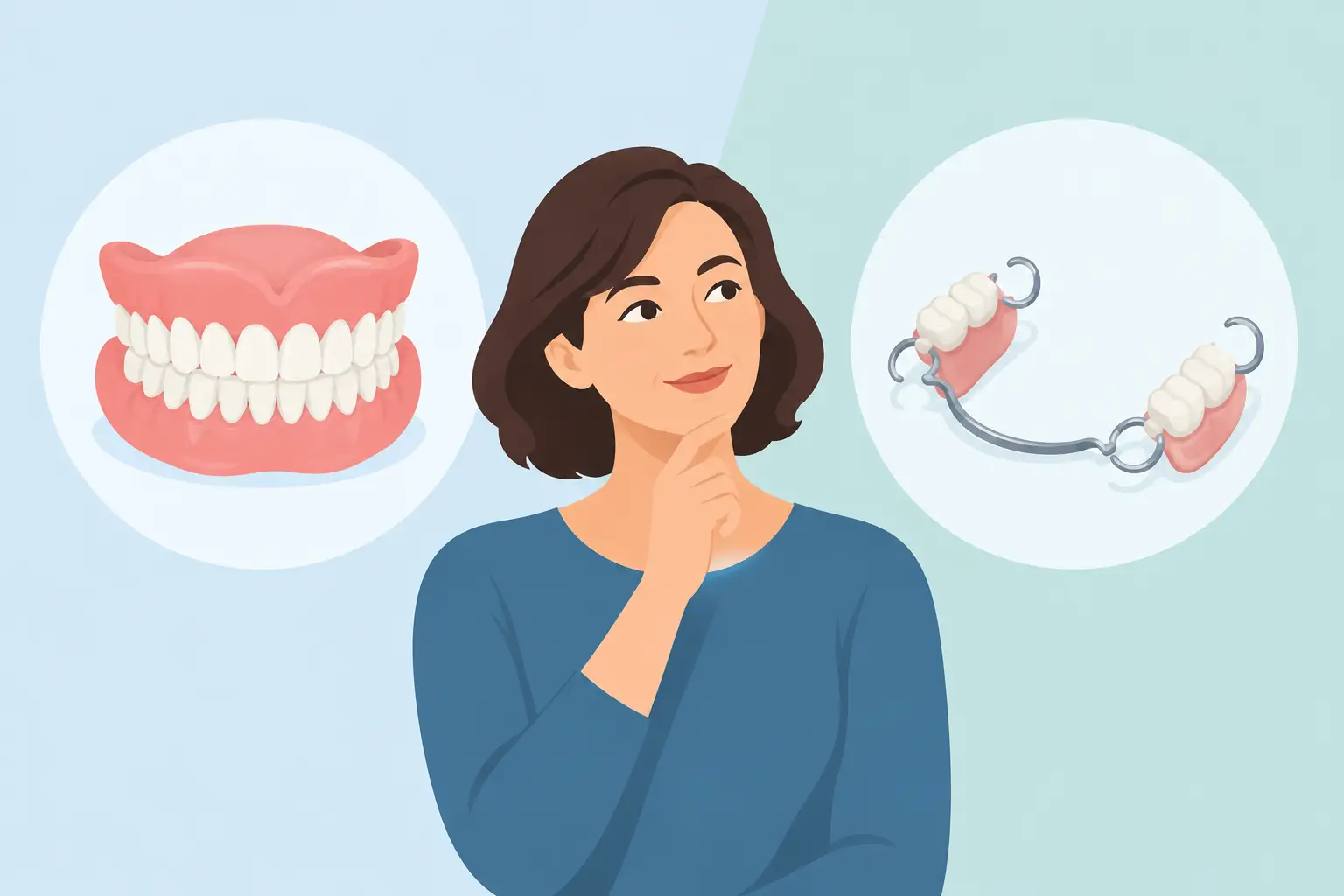
A full denture replaces all missing teeth in the upper arch, lower arch, or both. It rests on the gums and is custom-made to support your facial appearance, help you chew, and restore a complete smile. Some full dentures are removable, while others may be stabilized with dental implants.
A partial denture replaces one or several missing teeth when healthy natural teeth are still present. It fills the open spaces between those teeth and is typically held in place with a lightweight framework, gum-colored base material, or clasps designed to rest against nearby teeth.
Put simply, a full denture is appropriate when an entire arch has no remaining teeth, or when the remaining teeth cannot be predictably saved. A partial denture is generally the more conservative solution when some natural teeth are healthy and stable enough to keep.
When a Full Denture May Be the Better Choice
A full denture may be recommended after all teeth in an arch have been removed or when advanced decay, gum disease, repeated breakage, or infection has left too few teeth to support a reliable bite. Keeping severely compromised teeth can sometimes lead to more emergency visits, more discomfort, and more treatment over time. In those situations, replacing the whole arch may provide a healthier, more predictable path forward.
Full dentures can be made after healing is complete, or they may be placed immediately after extractions in certain cases. An immediate denture means you do not have to leave the office without teeth, but the fit will usually need to be adjusted as your gums and bone heal. This is normal. Healing changes the shape of the mouth, and relines help the denture fit comfortably again.
Upper dentures often gain stability from the palate, while lower dentures can be more challenging because the tongue and moving floor of the mouth can affect retention. Denture adhesive can help some patients, but a persistent loose fit should be evaluated rather than managed only with adhesive. Relining, adjustment, or implant support may be a better answer.
When a Partial Denture Makes Sense
A partial denture is often a practical choice for someone missing several teeth but still able to keep other teeth. It restores gaps that can otherwise allow nearby teeth to shift, tilt, or over-erupt. Those changes can make cleaning harder and alter the way your bite comes together.
Partials are commonly made with either a metal framework or a flexible, gum-colored material. Metal-frame partials are thin, durable, and often provide a secure fit. Flexible partials can be appealing because they are less noticeable and do not use traditional metal clasps in the same way, though they are not ideal for every bite or every pattern of missing teeth.
A partial denture does require healthy supporting teeth and good daily hygiene. The teeth that anchor the appliance need to be checked regularly for plaque buildup, cavities, and gum inflammation. A partial is not a reason to put routine dental care on pause. It makes consistent home care and professional cleanings even more valuable.
Comfort, Appearance, and Eating
Both dentures and partial dentures require an adjustment period. Your mouth, facial muscles, and tongue need time to learn how to work with a new appliance. At first, it is common to notice extra saliva, mild sore spots, or slight changes in speech. These concerns usually improve with wear and small adjustments.
Eating should begin with softer foods cut into small pieces. Chew slowly and use both sides of the mouth when possible. With a partial denture, avoid biting directly into very firm foods with the replacement teeth, especially at first. With a full denture, foods such as sticky candy, tough meat, hard nuts, and crusty bread may require extra care.
Appearance is highly individual. Well-made dentures and partials are designed around your facial features, gum shape, bite, and desired tooth shade. The goal is not to create a generic smile. It is to create one that looks natural for you and allows you to speak and eat with greater comfort.
How Cost and Insurance Can Affect the Decision
Cost is a real consideration, but it should not be the only one. A partial denture may have a lower initial cost than replacing many teeth individually. A full denture can also be a cost-conscious option when an entire arch needs replacement. However, the total cost depends on the work needed before the appliance is made, such as extractions, gum treatment, fillings, or adjustments.
Insurance coverage varies by plan. Some plans contribute toward dentures or partial dentures on a set schedule, while others have waiting periods, annual maximums, or limits on replacement. Before treatment begins, it helps to understand your estimated benefits alongside your clinical options. A clear conversation about fees and timing can prevent unpleasant surprises.
It is also worth considering long-term maintenance. Dentures may need relines, repairs, or replacement as the mouth changes. A partial denture may need adjustment if a supporting tooth changes or requires treatment. Choosing the lowest upfront price without considering fit, durability, and follow-up care can become more expensive later.
What About Dental Implants?
Implants are not required for everyone, but they can change the conversation. For a person with a full lower denture that frequently moves, two or more implants may help stabilize the denture. This can improve confidence while eating and speaking. Some patients also use implants to support a fixed restoration rather than a removable denture.
For patients considering a partial denture, an implant may sometimes replace a single missing tooth or support a larger restoration without placing clasps on neighboring teeth. Implant treatment requires adequate bone, healthy gums, and a review of your overall health. It also involves a higher initial investment and a longer treatment process than a removable appliance.
The best option is not automatically the most advanced one. A carefully fitted partial or full denture can be a dependable, comfortable solution, especially when it is matched to your oral health, budget, and goals.
Caring for Dentures and Partials
Removable dentures and partials should be cleaned every day. Take them out over a folded towel or a sink partly filled with water, since they can break if dropped. Use a soft denture brush and a cleaner intended for dentures, rather than regular toothpaste, which can be too abrasive.
Clean your gums, tongue, and any remaining natural teeth as well. If you wear a partial, brush and floss around the supporting teeth carefully. Unless your dentist gives you different instructions, remove removable dentures at night to give the gum tissue a rest and to clean the appliance properly.
Never try to adjust a clasp, trim the appliance, or repair a crack at home. A denture that suddenly feels loose, causes sores, or breaks should be seen promptly. Small problems are often easier to correct before they interfere with eating or damage the appliance further.
Questions to Ask Before You Decide
A helpful consultation should leave you with clear answers. Ask whether your remaining teeth have a good long-term outlook, whether a partial can be supported safely, how many appointments your treatment will take, and what adjustments may be expected after delivery. If extractions are needed, ask whether an immediate denture is appropriate and what healing will look like.
For patients in Quincy and the South Shore, Quincy High Care Dentistry can help evaluate missing teeth, explain practical options, and create a treatment plan that respects both comfort and budget. The decision does not need to be rushed, but pain, swelling, loose teeth, or infection should be addressed promptly.
The right replacement should help you return to ordinary moments that matter: sharing a meal, speaking without self-consciousness, and smiling without holding back. Start with a complete evaluation, ask direct questions, and choose the option that supports your health for the years ahead.